

The Triune Brain
Though primitive in its evolution, the human brain is incredibly complex, with countless interconnected regions and functions. In this program, we use a simplified model that highlights three key areas most relevant to developing emotional intelligence. This theory proposes that the brain evolved in three distinct layers over time. First a survival centre followed by an emotional centre and finally a thinking centre.
While simplified, this model offers a helpful way to understand how our instincts, emotions, and rational thinking interact—and sometimes compete.
Watch this 4-minute video to explore how these three brain systems work together and influence how we respond to the world around us:

Each part of the brain plays a vital role. Emotional intelligence emerges when we learn to integrate all three functions in harmony.
The Hand Model of the Brain
This simple trick helps us visualise and remember the different parts of the brain, how they function and how they relate to emotional intelligence.
Survival Centre – Palm
Representing the reptilian brain (around 300 million years old), the palm symbolises our most primitive system responsible for basic survival functions like heartbeat, breathing, digestion, reproduction, and the stress response. Its role is to react quickly to keep us alive.
Emotional Centre – Thumb
The thumb represents the mammalian brain (about 200 million years old), shared by all mammals. This is the centre for emotion and memory. Its job is to remember how experiences made us feel, so we know what to seek out or avoid in future.
Thinking Centre – Fingers
The fingers represent the neocortex, the newest part of the brain (around 60,000 years old). This is what sets humans apart from other primates. It allows us to reflect, regulate, and think about our thinking. This centre enables executive functions like reasoning, planning, innovation, and emotional regulation.
Together, these three centres form the foundation of how we think, feel, and act.
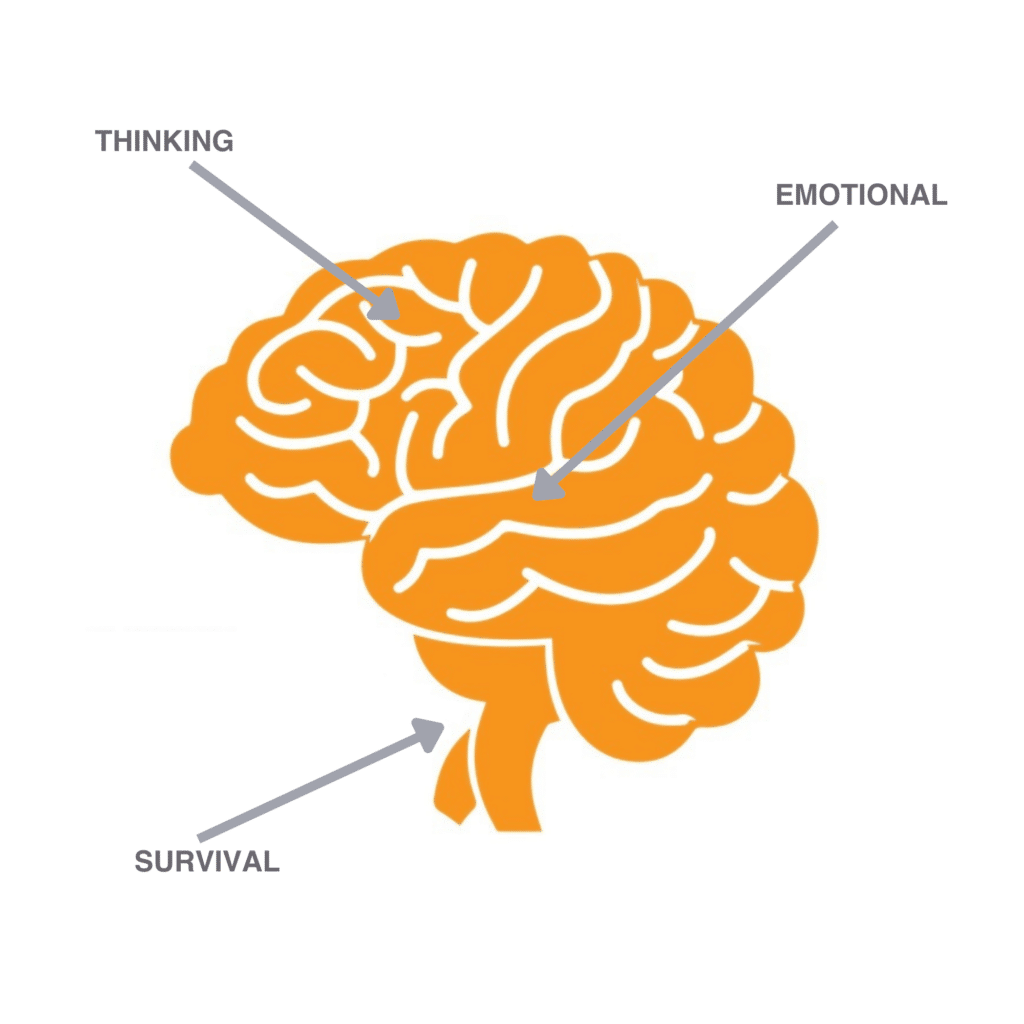
Emotional intelligence develops when we learn to integrate all three without letting one dominate the others.
If our thinking centre isn’t engaged, we lose the ability to think clearly, plan strategically, and regulate our emotions—often allowing feelings to take over our decision-making.
If our emotional centre isn’t engaged, we struggle to learn from experience, make wise, values-based choices, and connect effectively with others.
If our survival centre is underactive – well, we wouldn’t be alive. But more relevant here, if it is overactive, we begin to respond to everyday challenges as if they’re immediate threats, triggering stress responses that aren’t always helpful or necessary.

Reflective Questions
Please take some time to answer the questions below. The power of self-reflection lies in your willingness to be honest and vulnerable. The more openly you engage, the more insight and growth you’ll unlock.
- Think of a team member or colleague. Which part of their brain seems to dominate in the way they respond, decide, or relate to others?
- Right now, which part of your brain may be most active or dominant, and how is it influencing your behaviour or decisions?
- How might this understanding of the triune brain shape the way you lead—especially in moments of pressure, conflict, or uncertainty?