

Stress, Physical Resilience & Performance
The stress-performance curve illustrates that not all stress is bad. In fact, we need a certain level of stress, known as eustress, to stay energised, focused, and motivated to perform at our best. But there’s a tipping point. When stress becomes too much, it turns into distress, and performance starts to decline. In this state, our brain’s survival centre (the “palm” in hand-brain models) takes over, triggering a fight-or-flight response. This shuts down the executive functions of the brain, reducing our ability to regulate emotions, solve problems, think creatively, plan strategically, stay organised, control impulses, and retain focus and working memory.
As leaders, our role is to manage stress intentionally, both for ourselves and our teams, so we can stay in that optimal zone of eustress more often. This means building resilience by paying attention to our personal stress triggers and early warning signs, using self-regulation tools like controlled breathing and mindfulness, and checking the mental frames we hold around our stressors and our ability to manage them. You can’t eliminate stress from life, but you can choose how you respond to it.
Watch this 3 minute video to learn more:

Resilience Building Strategies
Controlled Breathing
When we’re stressed, clear thinking often goes out the window. That’s because our survival brain takes over, making it harder to access logic, problem-solving, and emotional regulation. Controlled breathing is a simple yet powerful technique that helps us shift out of that reactive state and re-engage the thinking part of the brain.
By slowing and steadying the breath, we send a signal of safety to the nervous system. This not only calms the body but also helps us stay focused and grounded, even when things go wrong.
“Those who participate regularly in mindfulness activities actually change the structure and function of the brain areas associated with decision-making and rational thinking, emotional regulation, learning and memory, kindness and compassion”. Hölzel et al. 2011
Why It Works
Controlled breathing helps regulate the autonomic nervous system, which governs our unconscious bodily functions. When you slow and hold your breath, carbon dioxide (CO₂) levels naturally rise in the blood. This triggers a stronger cardio-inhibitory response via the vagus nerve during exhalation, which activates the parasympathetic nervous system, the part of your body responsible for rest, recovery, and calm.
This produces a grounded, relaxed state in both the mind and body.
Benefits of Controlled Breathing
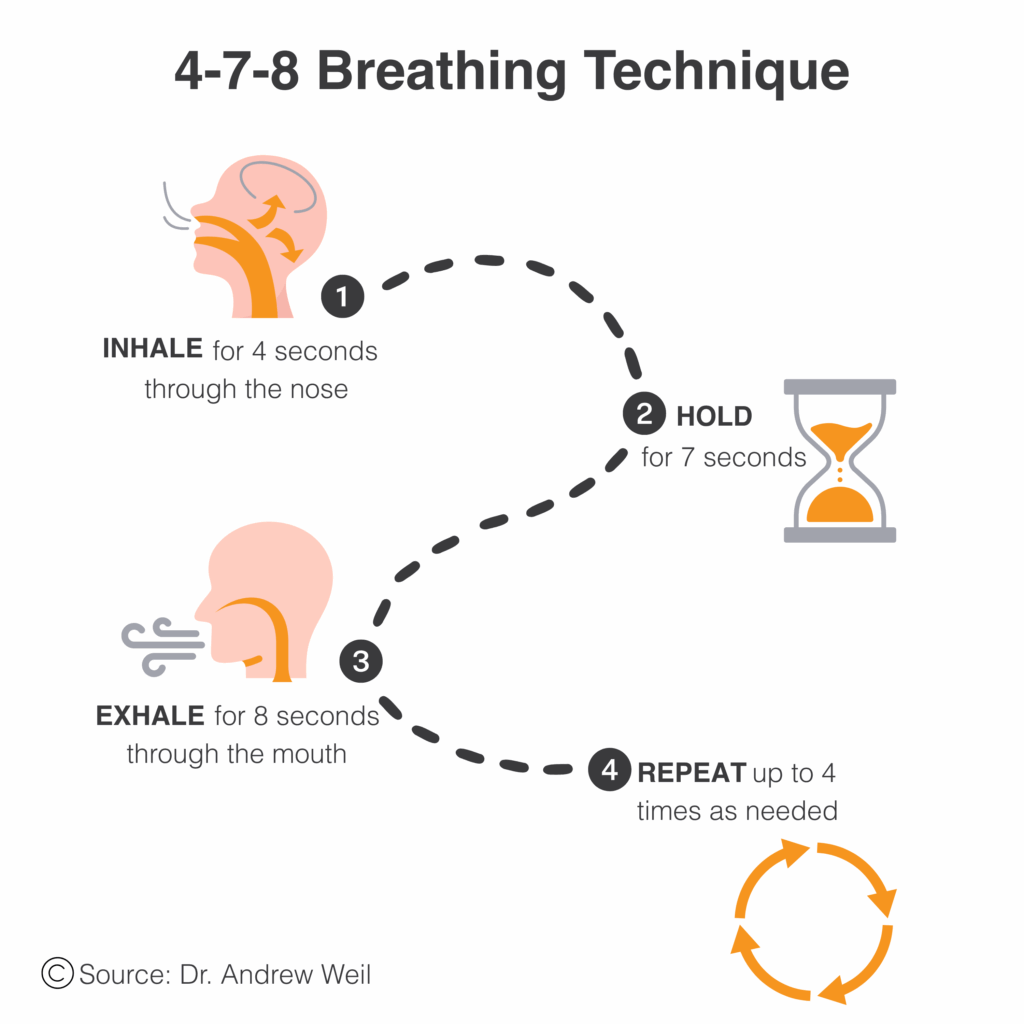
4-7-8 breathing technique
This is the most effective breathing technique and is especially useful when you’re feeling overwhelmed or need to reset.
Here’s how to do it:
- Inhale through the nose for 4 seconds
- Hold your breath for 7 seconds
- Exhale slowly through your mouth for 8 seconds
- Repeat for up to 4 cycles as needed.
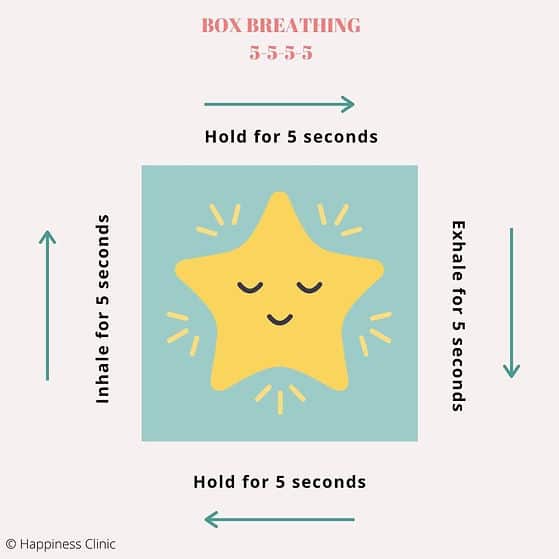
Box Breathing
If the above technique feels too challenging, this is an alternative and more simple option which is still a great re set.
- Inhale slowly through your nose for 5 seconds
- Hold your breath for 5 seconds
- Exhale slowly through your mouth for 5 seconds
- Hold your breath again for 5 seconds
- Repeat the full cycle 5 times
Sleep and it’s impact on stress
Good quality sleep is one of the most powerful tools we have for managing stress, supporting mental clarity, and sustaining high performance. It’s not just about rest—it’s when your body and brain reset, repair, and recharge. If we neglect sleep, our ability to think clearly, regulate emotions, and handle pressure suffers.
| The Research | Performance Impact | |
| Brain health | Sleep is the time your brain clears out waste, consolidates memories, and integrates information. | Without this reset, your executive functions—like decision-making, creativity, and emotional regulation—begin to falter. |
| Hormonal recovery | Sleep supports hormone regulation, specifically it reduces cortisol levels It also impairs levels of estrogen, progesterone (females) and testosterone (males). | Intensifies feelings of anxiety, irritability and depression. Reducing libido, muscle loss, increase fat stores, issues with energy, memory and mood. |
| Heart health | Just one hour less sleep can increase the risk of heart attack. | Chronic sleep deprivation is linked to higher vulnerability to chronic stress and burnout. |
| Cellular health | A lack of sleep even affects your genetic code. After one week of 6-hour nights, healthy adults showed changes in 711 genes—switching off immune function and switching on genes related to inflammation, stress, and disease. | This biological stress makes it harder to cope mentally, even before external stressors appear. |
| Immunity | One night of just 4 hours of sleep can cause a 70% drop in natural killer cell activity, which are essential for fighting cancer and infections. | Poor sleep limits your body’s ability to recover from stress and perform under pressure. |
| Memory and learning | Less than 8 hours of sleep can reduce your ability to form new memories by up to 40%. | This directly impacts your capacity to retain information, make strategic decisions, and stay mentally sharp in high-stakes environments. |
| Cancer risk | Disrupted sleep cycles, such as those caused by shift work, are now classified by the WHO as a probable carcinogen. | This disruption also dysregulates cortisol patterns, keeping your system in a prolonged state of stress arousal—far from the zone of high-performance. |
Sleep is not just recovery, it’s preparation. It equips your brain to navigate stress, stay focused, and make sound decisions under pressure. If you’re working on strengthening your resilience, improving your focus, or maintaining emotional control during stress, sleep is your first and most important lever. The more consistent and restorative your sleep, the better you’ll perform and the easier it will be to stay in that sweet spot of eustress, rather than tipping into distress.
Sleep Hygiene To-Do List
Establishing good sleep habits can dramatically improve both the quality and quantity of your sleep, supporting better stress regulation, memory, and performance. Here are practical steps to optimise your rest.
Here is a fascinating 5-minute video that explains how caffeine and alcohol impact sleep
Reflective Questions
Please take some time to answer the questions below. The power of self-reflection lies in your willingness to be honest and vulnerable. The more openly you engage, the more insight and growth you’ll unlock.
- Where are you on the curve? Is that working for you? Does anything need to change?
- Thinking about others in your team – Where might they be on the curve and how might you best support them?
- Thinking of a close friend or partner – Where might they be on the curve and how might you best support them?
- Is controlled breathing in your regular practice? If not, is it worth adding in?
- Look at the good sleep hygiene checklist, how are you currently scoring and what needs to change (if anything)?
- What can you do to build more physiological resilience in your team?
End of module. We look forward to seeing you at your next coaching call.