

“The only constant in life is change.”
— Heraclitus
The ancient Greeks knew it, and it’s just as true today. In an organisational context, change is especially complex because it affects a web of people, systems, structures, and resources. It’s rarely executed perfectly, and to be completely transparent, we don’t believe it ever will be.
But what we do know from experience is this, when organisations genuinely invest in the people side of change, resistance softens. Leaders who take the time to bring individuals along on the journey seem to find that their people are more likely to engage, support, and take ownership of change, rather than resist it or opt out entirely.
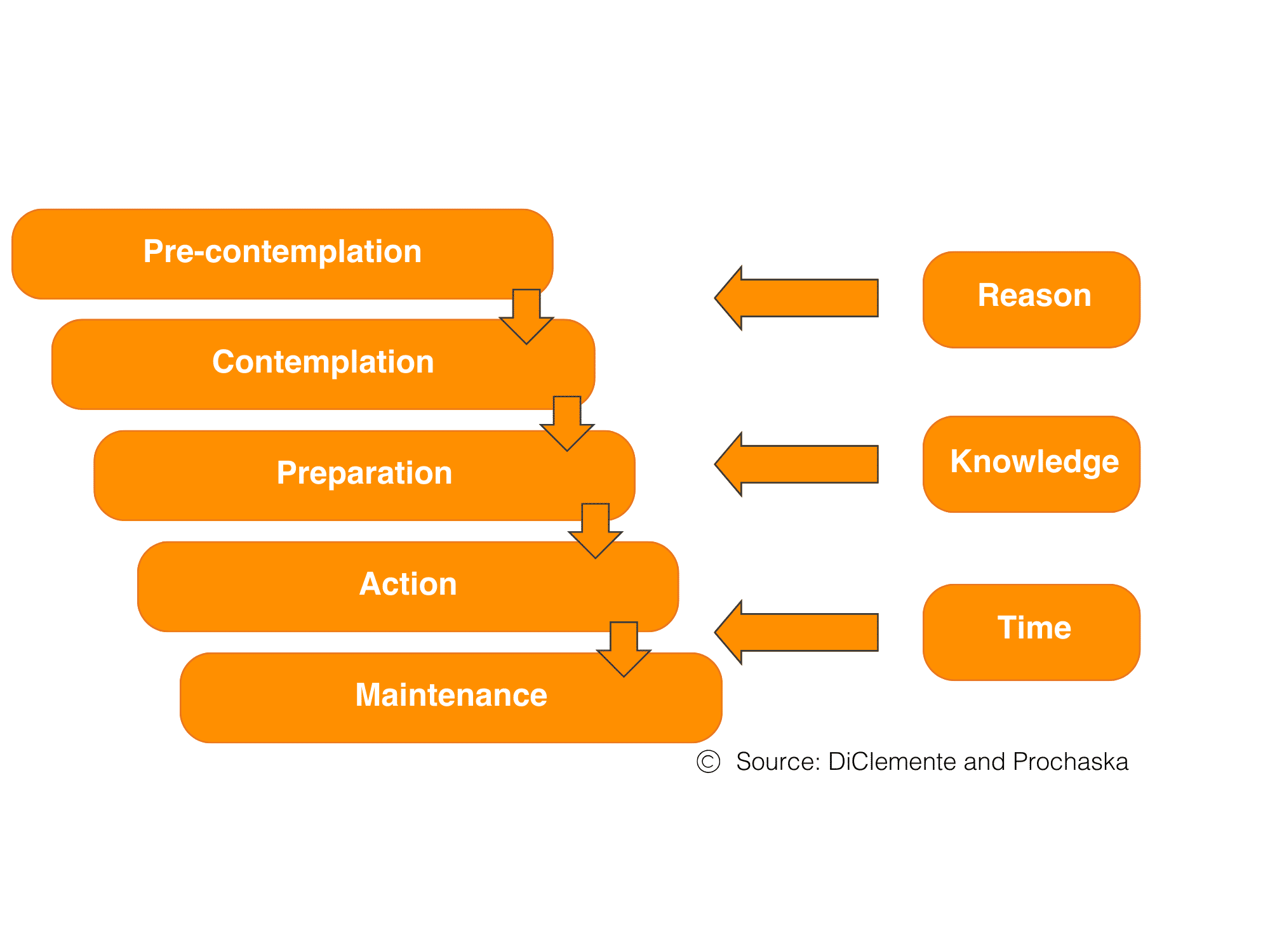
Human behaviour doesn’t shift overnight. Change takes time, reflection, and support. One of the most practical tools for understanding this process is the Transtheoretical Model of Behaviour Change, developed by Prochaska and Di Clemente in 1977. This model provides a clear framework to help leaders guide individuals through each stage of change with empathy and strategy.
In this 6.5-minute video, we explain the model and how it can be applied by leaders.

A Summary
Three secret ingredients
- A reason – a clear why behind the change that is meaningful to THEM, not you or the organisation.
- Knowledge – the tools required to execute the change. As leaders always ask, rather than assume a person has existing knowledge.
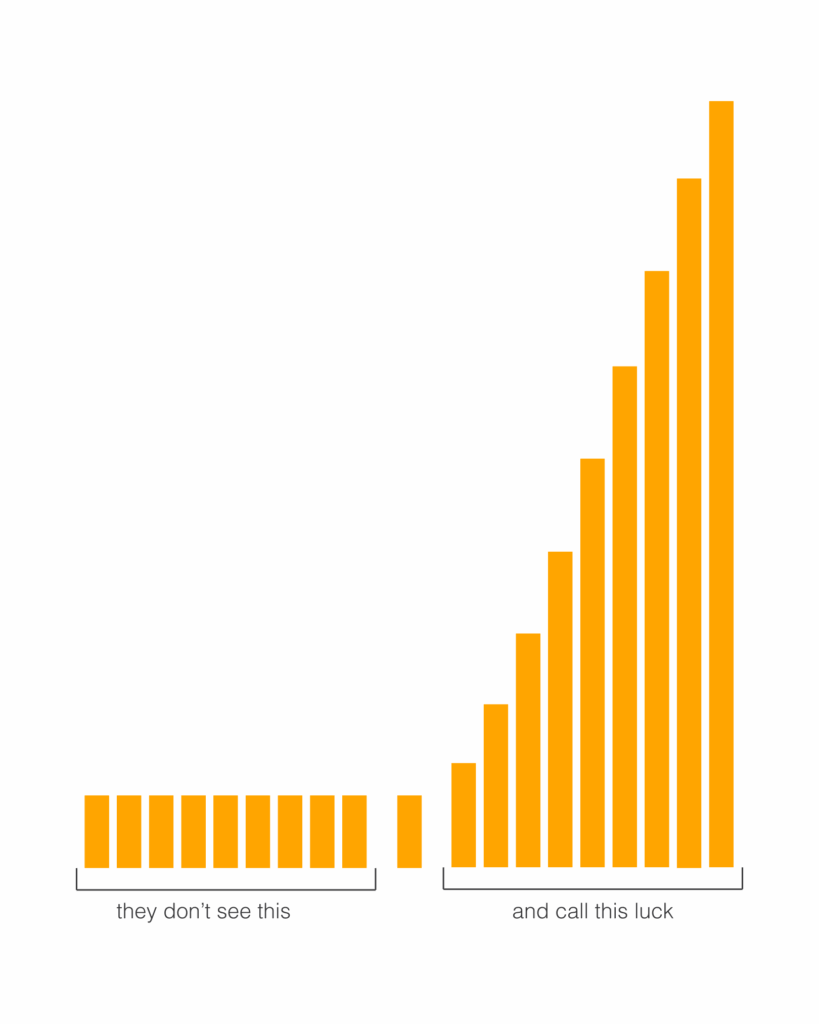
- Time – to prepare, practice, make mistakes, course correct and try again.
The Stages of Change Explained
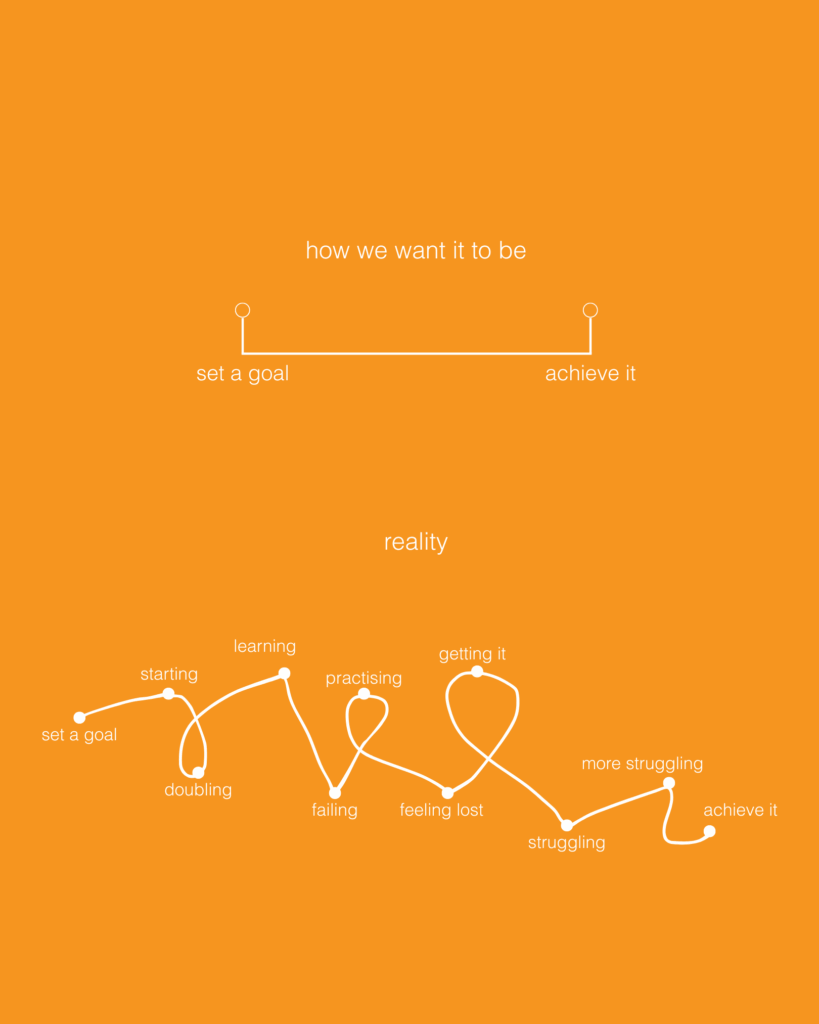
Change unfolds gradually through reflection, resistance, and repetition. Despite what we often believe, progress is rarely linear. It’s usually messy, uncertain, and learned by doing, failing, and trying again, only this time with greater wisdom. With intention, support, and time, meaningful change becomes both real and sustainable. By understanding the stages of change, we can better recognise where someone is in their journey and provide the kind of leadership they’re most likely to respond to.
1. Precontemplation – “Not Ready Yet”
Ignorance is bliss! At this stage, there’s little to no awareness of a problem. You don’t see the need to change just yet.
Jasmine, a team leader, doesn’t think she has a delegation problem. She prides herself on doing things herself because “it’s faster” and “I know it’ll be done right.”
Belief: “Delegation just slows me down.” Reality: She is overworked, while her team feels underutilised and disempowered.
2. Contemplation – “Thinking About It”
You’ve become aware that something needs to shift, but you’re still weighing it up. Is the reward worth the effort? Or is the cost of staying the same starting to feel too high?
During a 360-feedback session, Jasmine receives feedback: her team wants more trust and responsibility. She begins to reflect. “Maybe I am holding too much. I’m exhausted, and the team seems disengaged. Is the [perceived] risk of letting go worth the benefit of higher team engagement?”
3. Preparation – “Getting Ready”
You’re ready to act, but not just yet. This is the planning phase: scheduling time, gathering resources, researching, or maybe seeking out a coach or mentor. You’re setting the stage for success.
Jasmine commits to improving in this area. She blocks time for a leadership podcast on trust, books a coaching session, and identifies three low-risk tasks to delegate.
Actions: She researches strategies, sets goals, and mentally prepares herself to experiment.
4. Action – “Doing the Work”
Change is now in motion. You’re actively working on new habits and wiring new neural pathways. It’s effortful, and you’re tracking progress as you go.
She starts delegating one task per week, sets clear expectations, and checks in without micromanaging. It feels awkward, and she catches herself wanting to take tasks back. She finds her challenge is letting go of control
Strategy: She tracks her progress and reflects weekly, including asking for feedback from her team “is this new way of working working for you?”
5. Maintenance – “Keep It Going”
You’ve done it long enough that it’s starting to feel natural. The new behaviour becomes part of your routine. It takes less conscious effort and becomes your new normal.
After a few months of practice and relapse, delegation feels more natural.
Her team is stepping up, her workload is lighter, and she’s noticing higher levels of satisfaction in her team.
Outcome: As tasks arrive on her desk, she has a ritual of asking herself “is this something I should delegate?”
6. Relapse – “Learning, Not Failing”
At any point, you may slip, miss a day, fall back into old habits, or second-guess your progress. That’s human. Rather than seeing it as failure, treat it as feedback. Revisit your reason, reflect on what got in the way, and adjust. It might take a number of loops before the change sticks for good.
When under pressure, during high-stakes projects and when mentally fatigued, Jasmine didn’t catch herself before reverting back to doing everything herself. She notices the old pattern, reflects, and resets. “I need to trust the systems I’ve built, especially under stress. That is when I need them the most.”
Recovery: Revisits her coaching notes and re-engages the team.
Leadership at every Stage of Change
| Stage | Signs to look out for | Leadership Approach |
| Precontemplation | Denial of a problem, arguing against the change, justifying their current behaviour, diminution of severity of problem. | Create the burning platform – help them notice the problem. “Give them a reason” whilst normalising feelings of resistance. |
| Contemplation | Concerns they aren’t ready, concerns they may fail, weighing up of pros and cons of change, inconsistent motivation levels. | Be the salesperson – help them see the benefits. “Remind them of the reason” whilst validating their hesitations. |
| Preparation | Clear drive to change, unsure of how to change, exploration of strategies and resources that may help them, actively seeking help/support. | Be the mentor – guide them to the knowledge they need. |
| Action | Giving it a go, have started working on their change. | Be the coach – offer encouragement, check-ins, and feedback. “Give them the time to practise and embed.” Normalise set backs. |
| Maintenance | Not really thinking about it anymore, now an established habit, doesn’t require much effort. | Be the cheerleader – reinforce and acknowledge their good work. |
| Relapse | Their effort has (temporarily) been interrupted, barriers are coming up that are making the change hard, circumstances have may changed (increase in stress/change in commitments). | Meet them where they’re at – revisit the stage they’ve returned to and apply the relevant strategy. |
When a leader knows how to notice the behaviours of each stage and how to adapt their approach accordingly, change can happen more efficiently and effectively.
Activity: Applying the model in your life
Take some time to reflect on the following questions and record your responses in your Leadership Journal. Make sure you select a change you want to make that you also feel comfortable discussing with your group. Bring your reflections to your next small group coaching session.
- What is a change you are personally navigating?
- Which stage of this model are you currently at? (Remembering that we can move back and forward through the model)
- What is the underlying reason you are at that stage?
- Are you content at that stage or would you like to move? If yes, to where?
- If you do want to move, what could you do differently to help momentum?
- What is one commitment you would like to set for yourself to enable progress?

Reflective Questions
Please take some time to answer the questions below. The power of self-reflection lies in your willingness to be honest and vulnerable. The more openly you engage, the more insight and growth you’ll unlock.
- Of the five different leadership approaches outlined in the above table, which ones feel more comfortable to you than others? Is there an impact of this preference? If so, what?
- What is your relationship with the Relapse Stage? What frame comes to mind when you or someone else falls off the horse?
- How does your frame around relapse impact on your team’s growth mindset and learning culture?
- Consider a recent change example in your workplace, how can this model support your team to get to maintenance and stay there?
- Is there an opportunity to alter your leadership approach to best suit the current ‘stage of change’ of a team member? If yes, how?
End of module. We look forward to seeing you at your next coaching call.