

We’re often asked, “What is the best leadership style?” And our answer is always the same (and a little frustrating):
“It depends.”
At ACP, we believe great leadership is contextual. What works in one situation might fall flat in another. This is because effective leadership isn’t about sticking rigidly to one approach or doing what feels most comfortable to us. It’s about adapting to the people, priorities, and purpose in front of us.
This is where Situational Leadership comes in. Developed by behavioural scientist and management expert Paul Hersey and later expanded by Ken Blanchard, this flexible framework gives leaders a practical way to match their leadership style to the performance needs of their team members. Unlike models that promote a single ‘ideal’ style, Situational Leadership embraces adaptability, enabling leaders to shift behaviours based on the specific development level of each individual or team.
It provides a clear, repeatable process to help you choose the most effective approach, whether someone needs more direction, support, autonomy, or a mix of all three.
Watch this 6 minute video to learn about the four approaches, when to use each and the traps leaders can get stuck in for each style.

Directing
Also known as telling or guiding, the Directing style is best suited to team members at development level one, those who are new to the task and require clear, structured guidance. This is a short-term, instruction-heavy approach focused on relaying information with clarity and consistency. The leader gives specific directions, outlines expectations, and closely monitors performance to ensure early progress.
The goal is to help the team member build competence quickly while maintaining their initial enthusiasm. Importantly, this style also supports key SCARF needs, particularly certainty (clear expectations) and relatedness (feeling supported). When used well, Directing can accelerate the team member’s journey up the S-curve of learning without overwhelming them.
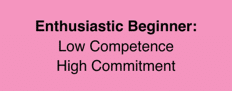
Development Level One: The Enthusiastic Beginner
At the first development level, we meet someone who brings high commitment but low competence in relation to a particular task or environment. They’re often highly motivated and eager to contribute, but lack the experience, context, or skills needed to perform confidently.
For example, a new hire may arrive with strong energy and drive but feel uncertain navigating internal systems or team protocols. In this situation, adopting a Directing style is most helpful. The leader provides step-by-step instructions, sets clear boundaries, and offers regular feedback and check-ins.
While decision-making rests with the leader, the team member’s enthusiasm can be used to generate momentum provided they feel safe, supported, and clearly guided. This approach is not about micromanagement, it’s about creating a clear, structured pathway for early success.
Coaching
Also known as selling or explaining, the Coaching style still involves the leader setting direction and making decisions, but with a stronger focus on helping the individual understand the “why” behind the work. This approach builds buy-in, engagement, and develops confidence, while maintaining necessary structure and guidance.
It’s especially useful when a team member starts asking thoughtful questions or showing curiosity about how or why things are done a certain way. These moments often signal that the individual is ready to move beyond basic task execution and wants a deeper understanding. This drive to understand is a cue to shift from Directing to Coaching, by responding to their curiosity with clarity and encouragement, rather than defensiveness.
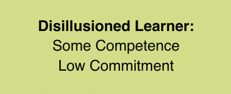
Development Level Two: The Disillusioned Learner
At development level two, we meet someone who has moved beyond the basics, is beginning to understand the work more deeply, but is still gaining confidence and experience. They may be feeling uncertain or less motivated than when they first started. It’s common at this stage for individuals to question established processes, especially if they differ from previous roles or assumptions. Most of us have had that experience where the rose-coloured glasses created from the initial job interview start to fall away…
For example, a new analyst might start questioning why the team uses a particular reporting format that seems less efficient than one they’ve used before. They’re not trying to be difficult, they’re seeking to understand. Or they may realise that stakeholder engagement is more layered than expected, and start second-guessing their approach.
In these cases, the Coaching style is most effective. The leader continues to provide direction but adds context, encouragement, and meaningful dialogue. They explain the rationale behind processes, explore alternatives together when appropriate, and begin to involve the team member in decision-making and problem-solving. It’s about saying: “Your questions are valid. Let me help you understand the bigger picture, so you can grow into your full potential.”
Supporting
Also known as participating, collaborating, or facilitating, the Supporting style shifts away from giving instructions and instead centres on encouragement, feedback, and shared problem-solving. It’s most appropriate appropriate for someone in the third development level.
In these moments, the leader’s role is not to teach or direct, but to listen, validate, and create a space that supports this person to re-engage. This approach works particularly well when someone needs reassurance and emotional reinforcement, rather than technical guidance.
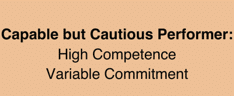
Development Level Three: The Capable but Cautious Performer
The third development level refers to someone with solid skills and good judgment, but who may be feeling uncertain, disengaged, or stretched too thin. They are fully capable of performing the task but may be experiencing a dip in confidence, motivation, or consistency. Often these dips are due to personal stressors or temporary setbacks.
For example, this may be a project manager who’s delivered consistently strong results but has recently missed a few deadlines and become more withdrawn in meetings. They’re more than capable, but something else, perhaps stress, burnout, or personal circumstances, is undermining their usual effectiveness.
In these situations, the Supporting style is the most appropriate approach. Rather than directing the work, the leader focuses on emotional support, collaborative problem-solving, and restoring self-belief. This might involve checking in informally, adjusting expectations temporarily, or offering more flexible ways to work through the situation. It’s about striking a balance between showing compassion, while still holding belief in their capability. This reinforces that although they are still accountable, they’re not alone in their struggles and serves an opportune moment to show the team member you have their back.
Delegating
Often referred to as empowering or monitoring, the Delegating style is the most “hands-off” of the four leadership approaches. It’s best suited for team members classified as self reliant achievers. The leader steps back, allowing the individual to take full ownership of their tasks and decisions, while maintaining a light-touch, high-level oversight role. This approach supports autonomy and is ideal for experienced, self-driven performers who require minimal direction.
However, it’s important not to become too comfortable here as a leader. Even your most capable team members still need you, just in a different way. They still need consistent signals, demonstrated through both words and actions that you appreciate their efforts and remain invested in their growth.
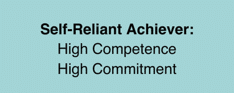
Development Level Four: The Self-Reliant Achiever
Finally, team members at this stage demonstrate high levels of both competence and commitment. This could include anyone from a senior coordinator to an entry-level administrator, what distinguishes them is not their job title, but their ability to consistently deliver results with minimal supervision, take initiative, overcome challenges independently, and often support or mentor others.
In this case, a Delegating style is most effective. It communicates trust and confidence in their ability by offering full autonomy and the opportunity to take on stretch tasks. While you remain available for strategic input or support, the day-to-day decisions and ownership are theirs. This balance of freedom and availability helps sustain engagement. In fact, over-managing someone at this level may do more harm than good by eroding motivation and signalling a lack of trust.
The Situational Leadership model provides a valuable tool for identifying the most effective leadership style for a specific interaction. However, it’s crucial to remember that the model is fluid as development levels are not fixed. A person’s level can shift significantly depending on the task at hand.
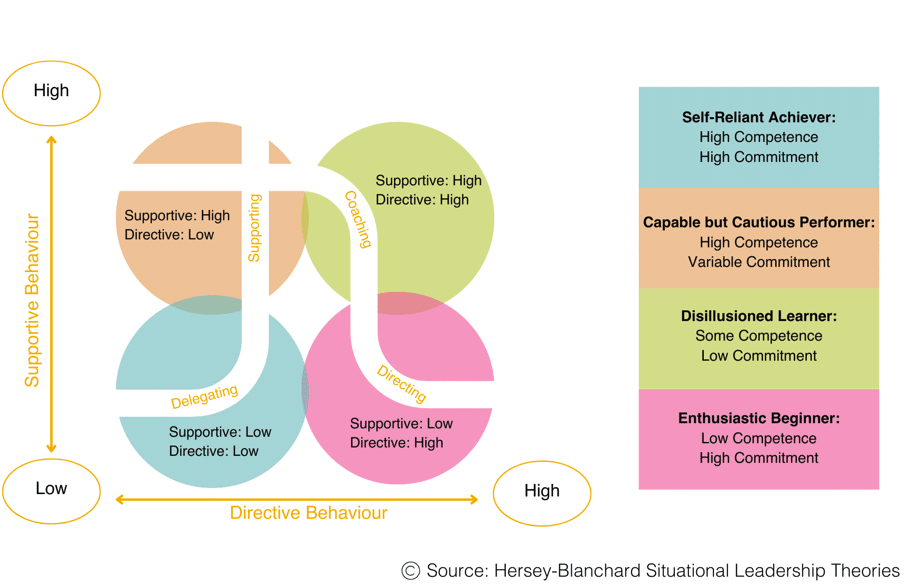
The focus is on situations, not people. Your style should be tailored to a persons development level, rather than based on assumptions of performance tied to a persons role, tenure, or seniority.
Yet even after learning this, we still hear leaders say things like, “Yes, but as a senior engineer, they should really just know better,” even when that person is new to the organisation. Or in reference to a graduate team member, “They just don’t listen. I tell them how to do it, but they keep making the same mistakes.”
These kinds of frustrations are common, but they often reflect a mismatch between a leader’s assumptions about someone’s capability and the person’s actual development level in a given context. The senior engineer might bring a wealth of technical knowledge but still be an enthusiastic beginner when it comes to navigating the systems, clients, or expectations in a new team. The graduate, on the other hand, might have a stronger drive for autonomy, so may respond better to a nimble jump between directive and coaching styles to develop early competence and judgment.
As leaders, it is our responsibility to stay attuned and adaptable and we must remain accountable for this. When we can let go of rigid expectations and instead meet people where they are, we create the optimal conditions for growth, engagement, and long-term success.
Knowing your default style
All of us have a Situational Leadership style that feels more natural or comfortable. It’s often a go-to approach that reflects our personality, past experiences, or professional identity. For some it’s directing, finding comfort in structure and control. For others it’s supporting, focusing on empathy and collaboration.
These preferences are normal. However, when we are stressed, overwhelmed, or fatigued, we tend to lose sight of the situation in front of us and default even more strongly to our preferred style, often without realising it. Under pressure, we might become overly directive, overly passive, or overly accommodating, regardless of what the situation requires of us.
The first step in becoming an adaptable leader is to become aware of your default setting by asking yourself:
When we learn to recognise our defaults, we give ourselves the chance to pause, reflect, and choose the leadership style that will best support the development level of the individual in front of us, not just the one that feels most comfortable in the moment.
This kind of self-check is a powerful leadership habit. It transforms our autopilot reactions into intentional responses and that is where truly adaptive leadership begins.
Application Activity
Below are four workplace scenarios, each suited to a different leadership style within the Situational Leadership Model. Your task is to reflect on what effective leadership would look and sound like in each context, based on the appropriate style.
You inherit an experienced worker, but you realise they are not aware of the specific process you use in your team.
Remember, a good directing approach provides clear structure and expectations without assuming prior knowledge. A leader is specific, task-focused, and maintains close oversight while the person builds competence in this new process.
You have a new starter who is curious to understand why you do it this way.
Remember, a coaching approach balances structured guidance with explanation and involvement. The leader still sets the direction but invites engagement, questions, and learning.
You have a competent and confident worker who is adjusting to some significant personal challenges outside of work.
Remember, a supporting approach offers emotional availability, flexibility and partnership. The leader doesn’t need to direct the task but provides space and empathy.
You have a high achiever, confident and capable and ready for the next challenge.
Remember, a delegating style gives full ownership while ensuring the person knows the leader is available for strategic input or coaching if requested.
Example Responses
To help you reflect and apply the Situational Leadership model in your own voice, we won’t reveal our example responses just yet. This is an opportunity to explore your understanding and practice self-directed learning. After you have the opportunity to workshop your responses in the Module 10 coaching call, the sample responses will be shared here, so make sure to check back and see how you went.
In the meantime, consider:
W

Reflective Questions
Please take some time to answer the questions below. The power of self-reflection lies in your willingness to be honest and vulnerable. The more openly you engage, the more insight and growth you’ll unlock.
Use the questions below to explore your natural leadership preferences and how they align with the needs of your team.
- Which of the Situational Leadership styles feels most comfortable for you?
- Why do you think that is? How does it show up in your day-to-day interactions?
- Which style feels least comfortable or most unfamiliar?
- What makes it more difficult for you to adopt? How might that impact your ability to flex when needed?
- Write down the names of your current team members.
- Next to each name, note which style you think they need from you right now based on their current capability and motivation for the tasks they’re facing.
- In what situations are you leading based on what feels natural for you, rather than based on what your people need?
- Where might a shift in your style help someone move forward with more clarity, confidence, or ownership?
End of module. We look forward to seeing you at your next coaching call.