

“The one who knows all the answers has not been asked all the questions.”
– Confucius
Why Coaching Works: Revisiting the Brain
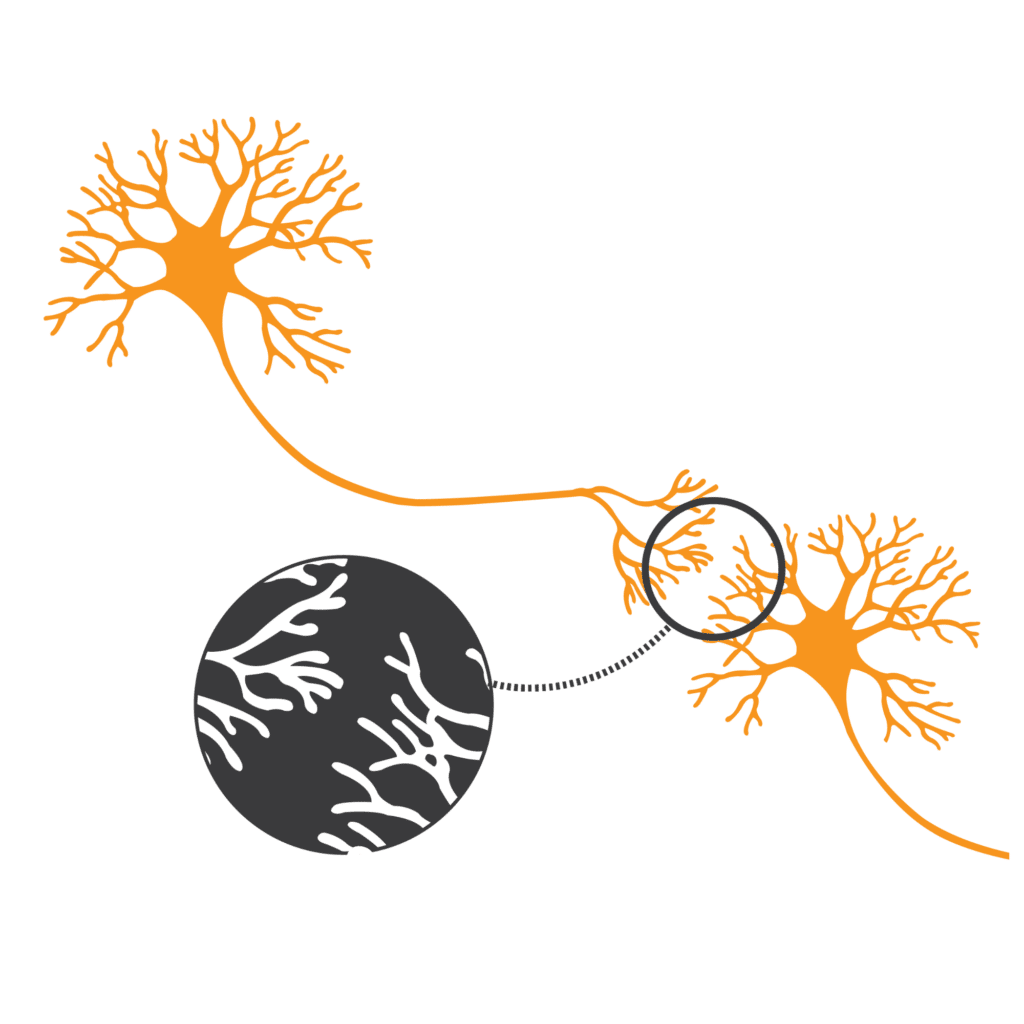
Cast your mind back to the very first module in the Rising Leaders course, where we explored how the brain works—particularly in the topic on Neurons & Learning. The brain is made up of approximately 100 billion neurons (brain cells), each with the potential to form up to 10,000 synaptic connections with other neurons. These connections, known as synapses, are how learning happens. You may remember that every time we learn a new skill or concept, a different cluster of synapses link, forming new neural pathways. With repeated use, those pathways are strengthened.
Learning new things is how we “exercise” our brain.
But as we explored in the topic on the Limitations of the Brain, the brain is also incredibly energy-conscious. It prefers predictability and efficiency, which means once a habit or neural pathway is established, the brain tends to default to it. This is why change can feel difficult, even when we know it’s necessary.
Neuroplasticity
This is where the concept of neuroplasticity comes in. We briefly touched on this in the topic on Reframing. Neuroplasticity is the brain’s ability to reorganise itself by forming new neural connections throughout life. It’s the foundation of growth, adaptability, and resilience. When we learn something new or choose to respond differently to a familiar situation, we’re not just thinking differently, we’re physically rewiring the brain.
Coaching plays a powerful role in this process. It is designed to disrupt unhelpful patterns of thought, challenge long-held assumptions, and spark new ways of thinking. In doing so, coaching helps people form new neural connections that can lead to more effective behaviours, clearer thinking, and greater personal growth. So, when you take a coaching approach with others, or when you allow yourself to be coached, you are quite literally creating the conditions for change at the neural level.
Coaching isn’t just a conversation, it’s a full brain workout…
Watch this 3.5-minute video to understand the power of questions and how we use them to elevate conversations:

If you want other people to think for themselves, you need to let them.
One of the most effective ways to encourage independent thinking is to ask good questions. When you ask someone a question, rather than telling them what to do, something extremely powerful happens in the brain. The entire brain becomes active, engaging both reflection and problem-solving centres, and triggers a release of serotonin, which helps create a sense of calm and psychological safety. This process not only encourages deeper thinking, but also supports the creation of new neural pathways, a key mechanism for learning and behaviour change.
Over time, this approach strengthens a person’s sense of self effectiveness which, if we cast our minds back to the topic on Self-Esteem, is their belief in their ability to solve problems and make decisions. As that confidence grows, so does overall self-esteem, often creating a positive ripple effect in other areas of life and work.
As Anna described, one important brain system at play here is the Reticular Activating System (RAS). No matter the quality, this part of the brain is hardwired to seek answers to ANY question it encounters, whether heard, read, or self-generated. Once a question is posed, the RAS brings it into conscious awareness and filters incoming information to help answer it.
In short, answering questions directs our attention and shapes our perception far beyond what passively listening to information does. This makes them valuable tools to intentionally steer our thinking and that of others in a helpful direction.
Why this matters in leadership
Coaching conversations rely on questions not just to gather information, but to spark insight, build accountability, break down perceived barriers and generate forward momentum. When we understand how the brain responds to questions we begin to see just how powerful they can be.
For leaders, this matters because asking the right questions at the right time doesn’t just solve problem, it develops people. It builds capability, encourages independent thinking, and fosters a culture where ownership and learning thrive. With this in mind, consider how the following principles influence the effectiveness of a coaching conversation:
The Brain & Questions
Questions in Leadership Coaching
Powerful questions follow the thinking path of the coachee, not the coach. This means that when used effectively, questions supercharge the conversation by:
This matters deeply in leadership because the ability to ask the right questions at the right time is a hallmark of adaptive, empowering leadership. Rather than creating dependency or bottlenecks, leaders who coach develop capable, confident, and self-directed team members. In doing so, they build a culture of trust, ownership, and continuous learning, which are essential ingredients for high-performing teams. To use questions effectively in coaching and leadership, it’s important to understand that beyond high or low quality, not all questions are created equal.
Different types of questions serve different purposes and can shape the direction and depth of a conversation in profoundly different ways.
In coaching, it is widely recognised that open-ended questions are the most effective for encouraging reflection, exploration, and meaningful dialogue.
How do I ask high-quality questions?
Firstly, enter the conversation with a mindset of total curiosity…
Open questions invite more than a simple one-word answer (like yes, no, good, or fine). They encourage the coachee to think more deeply, reflect on their experience, and articulate their thoughts in a more meaningful way. This is because open questions are phrased so that:
Secondly, keep your questions open ended…
Open questions often begin with who, what, when, where, or how. These questions are essential for uncovering insight and supporting growth in coaching conversations in different ways. Each type of open question triggers a different kind of thinking and serves a specific function in guiding reflection, uncovering insight, prompting action, or clarifying direction.

WHO?
Used to identify people involved, responsibilities, strengths or skills.
WHAT?
Used to explore actions, possibilities, or clarify thinking.
WHEN?
Used to establish timelines, urgency, or decision points.
WHERE?
Used to locate thinking, actions, or logistics.
HOW?
Used to measure, clarify steps, or define an approach.
Thirdly, consider the functions of the coaching conversation…
| Agree on the Agenda / Focus Used to establish purpose and direction for the conversation. | What’s the most important thing we could talk about today? What outcome would make this conversation valuable for you? What’s on your mind right now that you’d like clarity on? If we had just 10 minutes, what would you want to focus on first? |
| Build Rapport Used to create connection, psychological safety, and trust. | What else can you tell me about that experience? How has your week been so far? What’s something that’s gone well recently? What do I need to know about how you work best? What’s energising you (or draining you) at the moment? |
| Create Clarity Used to help the coachee articulate thinking, feelings, or decisions. | What does success look like in this situation? What’s really driving this goal for you? What do you already know, and what’s still unclear? What might you be overlooking right now? |
| Gain Commitment Used to move from insight to action and ensure follow-through. | What is the first step you’ll take, and by when? What will you do differently as a result of this conversation? What might get in the way, and how will you overcome it? How will you keep yourself accountable? |
| Challenge Assumptions Used to disrupt unhelpful narratives and open up new perspectives. | What are you assuming here that might not be true? If you weren’t afraid, what would you do? What rule are you following, and who says it has to be that way? What story are you telling yourself here? |
| Encourage Self-Reflection Used to deepen insight and connect behaviour with values or strengths. | What have you learned about yourself in this process? What strengths are you drawing on right now? What patterns do you notice in how you’ve responded? What do you want to be known for in this situation? |
| Identify the Gap Used to highlight what needs to shift internally or externally to reach a goal. | What mindset shift would support you here? What skills or behaviours would move you closer to your goal? What’s currently missing, and what would fill that gap? What needs to change to make this happen? |
What about the WHY questions?
While “why” questions can be valuable in some contexts, they can also unintentionally trigger defensiveness, especially when discussing setbacks or emotionally charged topics. That’s because “why” can sound like a challenge rather than an invitation to reflect.
Instead, consider using what, how, or when questions. These alternatives shift the tone of the dialogue which helps keep the conversation open, reflective, and non-judgemental, encouraging growth rather than triggering defensiveness.
Instead of asking: “Why didn’t you meet that deadline?” Try asking:
Self-Coaching Prompts
Great leaders don’t just coach others, they also learn to coach themselves. In moments of pressure, uncertainty, or conflict, the ability to pause and ask yourself powerful questions can help you step back, gain perspective, and choose a more thoughtful response. Self-coaching builds emotional regulation, self-awareness, and decision-making clarity, all of which are essential for effective leadership.
These reflective questions are designed to help you interrupt unhelpful patterns, reconnect with your values, and lead with intention.

Reflective Questions
Please take some time to answer the questions below. The power of self-reflection lies in your willingness to be honest and vulnerable. The more openly you engage, the more insight and growth you’ll unlock.
Take a moment to reflect on how you show up in conversations, as a listener and as a leader who uses questions to empower others.
- When (or with whom) do I naturally stay curious and use questions effectively?
- When (or with whom) do I find it harder to stay curious and open-minded?
- How often do I truly listen—with the intent to understand, rather than to respond?
- What might shift in my relationships if I listened more and spoke less?
- Am I using questions in a way that builds initiative and ownership in my team?
- What, if anything, can I change about the way I use questions to reduce defensiveness or lead the conversation?
End of module. We look forward to seeing you at your next coaching call.