

Identifying Emotions
Research into emotional intelligence shows that the ability to accurately perceive emotions in yourself and others is the strongest predictor of leadership effectiveness. In other words, if you want to strengthen your EI as a leader, start with perception. The better you are at noticing and labelling emotional cues, the more effectively you can respond, build trust, and influence outcomes.
Côté, S. (2017). Emotional intelligence in organizations. Annual Review of Organizational Psychology and Organizational Behavior, 4, 59–88.
Two powerful, evidence-based ways to improve emotional perception are to recognise physiological emotion markers and micro expressions.
Physiological markers are the bodily changes that occur when we experience emotion. These signals can help us identify what we, or someone else might be feeling, before it is consciously realised.
Micro expressions are brief, involuntary facial expressions that reveal a person’s true emotion, even if they’re trying to hide it. Covered in the next topic.
The Physiology of Emotions
Watch this 5.30 minute video to learn more about the physiological markers.

Why This Matters
Emotions don’t just happen in our minds, they create real, physical changes in our brains and bodies.
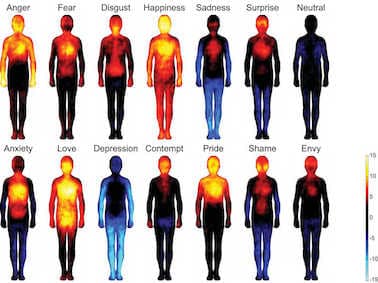
When we feel emotions like stress, excitement, or fear, our body responds with signals, a racing heart, shallow breath, tense muscles, or flushed skin. These signals are often our first clues that an emotion is present, sometimes even before we’re fully aware of it. As we described in the video, cross-cultural research demonstrates that these physiological signals are universal, indicating a biological basis for emotional expression.
Using mindfulness, we can train ourselves to notice these physiological cues. Noticing them early helps us better understand what we’re feeling and how we’re expressing those feelings outwardly, whether through posture, facial expression, or tone of voice. Since people tend to judge us based on our observable behaviour rather than our internal intentions, this awareness is crucial.
Sometimes, we might be unaware that we’re feeling irritated or anxious, but our body language still communicates that emotion to others. This can influence how people respond to us, often without anyone in the interaction realising why. By noticing how emotions show up in our bodies, we increase emotional awareness, improve self-regulation, and create more trust and clarity in our relationships.
A Leadership Example
A team leader is preparing to give constructive feedback to an underperforming employee. As they anticipate the conversation, their body reacts. Their shoulders tense, their jaw tightens, their brow furrows and their breathing becomes shallow, even though they haven’t said a word. While the leader may not consciously recognise they are feeling anxious or frustrated, their team member picks up on the tension through closed-off posture and clipped tone. This can cause the employee to become nervous or respond defensively in return, making the conversation less productive.
If this leader were aware of the physiology of emotion, they might use mindfulness before the conversation to pause, notice their tight chest and rapid breath, and take a moment to soften their shoulders and breathe deeply. This physiological shift not only calms their own nervous system but also signals a more open, non-threatening presence to the other person, fostering trust and improving communication.
While many of us can more easily spot emotional cues in others, we often overlook these signs in ourselves. Some of us have never paused to consider how our emotions manifest physically. Developing this internal awareness takes conscious effort (hello thinking brain). So, the next time you experience a strong emotion, take a moment to check in with your body, for the signals it is sending.
Experiential Activity
Take a few minutes to reflect on how emotions show up in your body and behaviour.
What physical or mental changes do you notice in yourself when you feel:
- Angry?
- Sad?
- Fearful?
- Disgusted?
- Happy?
- Contemptuous?
(Think about changes in posture, breathing, heart rate, facial and bodily tension.)

Reflective Questions
- What might others observe in you when you feel these emotions?
(Consider your tone, expression, body language, or energy.) - What are the risks of not noticing your emotional state in the moment, especially the way it shows up in your body and face?
(Think about missed cues, misunderstandings, or emotional build-up.) - Are you potentially missing opportunities to be more candid, vulnerable, or compassionate, either with yourself or others?
- If you were to get better at recognising your emotions as they arise, how might that improve your ability to manage stress more effectively?
(Consider how this could impact your leadership, relationships, or wellbeing.)