

Creating Accountability
What is accountability?
To take accountability means taking ownership of your actions, decisions, and their outcomes, both as an individual and as part of a team. In high-performing teams, accountability isn’t about blame or punishment; it’s about follow-through, shared responsibility, and mutual trust. When people consistently and respectfully hold themselves and each other accountable, it builds transparency, reliability, and psychological safety, all essential for effective collaboration and strong team performance.
Importantly, accountability is a learned behaviour. Regardless of age, background, or experience, anyone can grow their capacity for ownership and contribute to a more accountable team culture.
A powerful concept used to facilitate this is Locus of Control (Rotter, 1950).
Locus of control describes the extent to which a person believes they have power over the outcomes and circumstances in their life.
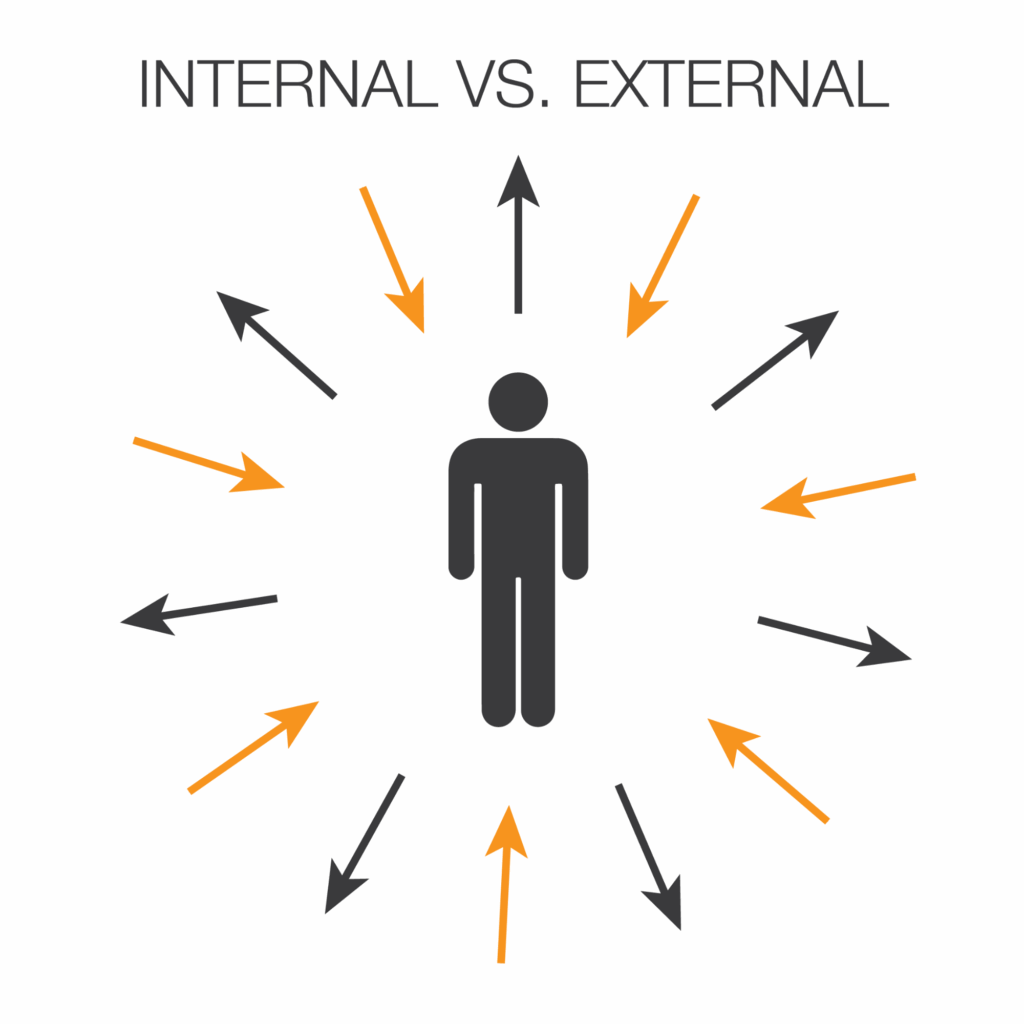
The word locus is a Latin word that means “location.” In terms of locus of control, it refers to the perceived “location” of control over events in one’s life. It identifies whether that feeling of control is internal (within the self) or external (a result of outside forces).
These two broad orientations, outlined below:
External
(The “Powerless” Frame)
Those with an external locus of control are more likely to attribute outcomes to outside forces such as luck, fate, or the actions of others. They may often feel like the victim of their circumstances, as though life is happening to them rather than something they can actively influence.
We refer to this as the Passenger Frame
Internal
(The “Empowered” Frame)
Those with an internal locus of control believe that their choices, behaviours, and efforts largely shape the outcomes in their lives. While they acknowledge that some factors are beyond their control, they focus on what is within their influence—using their actions to positively impact situations, people, and results.
We refer to this as the Driver Frame
Watch this 4-minute video to learn more:

Our Human Tendency
When things don’t go to plan, we often default to blame or externalise the problem. Why? Because it feels good…and it’s efficient. Remember, the brain is hard wired to conserve energy, seek reward and avoid discomfort (threat). Taking accountability often requires reflection, change, and effort—all of which consume a lot of mental energy.
As discussed in the earlier topic on Limitations of the Brain, when our system is depleted, we prioritise short-term emotional relief and energy conservation. Blame offers both. Yet while it may feel easier in the moment, it comes at a cost missed learning opportunities, stagnation, and disempowerment.
The Locus of Control Continuum
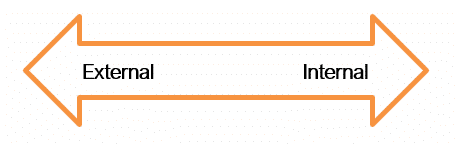
No one operates with a purely internal or external locus of control. We all move along a continuum, and our mindset can shift depending on our situation. For example, someone might take ownership at work but default to blame in personal relationships. An internal locus supports accountability, learning, and agency. An external locus, while sometimes protective, can reduce motivation and problem-solving capacity if overused.
A relatable analogy is to think of an external locus as a “passenger mindset” where life is happening to you, and an internal locus as a “driver mindset”, where you’re actively steering your outcomes. The most helpful way to understand this concept is to see it in action.
Working Examples
Here are two examples you may be able to relate to. The first focussing on an individual’s reaction to disappointment, the second being a team’s reaction. You’ll note similar behaviours and outcomes in both.
Individual: A Missed Promotion
Two team members, Joe and Müller, were both passed over for a promotion they had hoped to receive.
External Locus of Control (Passenger Mindset)
Joe feels defeated and frustrated. They think, “There’s no point trying—my manager plays favourites. I never get a fair chance anyway.” Joe attributes the outcome to office politics and luck. As a result, they withdraw, feel resentful, and put in minimal effort.
Internal Locus of Control (Driver Mindset)
Müller feels disappointed too but takes a different approach. They reflect: “I didn’t get the role—what can I learn from this? Maybe I need to build more visibility or strengthen a few skills.” Müller books a one-on-one with their manager to ask for feedback and creates a plan to improve for the next opportunity.
The above example highlights how locus of control influences mindset, motivation, and behaviour. While both responses are valid emotional reactions, one leads to growth and accountability, the other to disengagement and blame.
Team: Missed Project Deadline
A team fails to deliver a client project on time. There were unclear handovers, last-minute changes, and a few communication breakdowns.
External Locus of Control (Passenger Mindset):
Some team members respond by pointing fingers:
“We would’ve been fine if the client hadn’t changed the brief so late.”
“It’s not our fault—leadership gave us unrealistic time frames.”
“If everyone else just did their part properly, we wouldn’t be in this mess.”
They feel frustrated, blame external factors, and believe the situation was out of their control. As a result, they don’t recognise their role in the communication breakdowns, learning is limited, and similar mistakes are likely to be repeated.
Internal Locus of Control (Driver Mindset):
Other team members take a different view:
“Yes, there were external pressures—but we could have clarified the brief earlier and flagged risks sooner.”
“Let’s review what we could have done differently to stay on track.”
The team acknowledges the frustration around external factors but takes ownership for their part, looks for lessons, and unites to identify improvements to process and communication for future projects – the result, a more united and cohesive team unit.
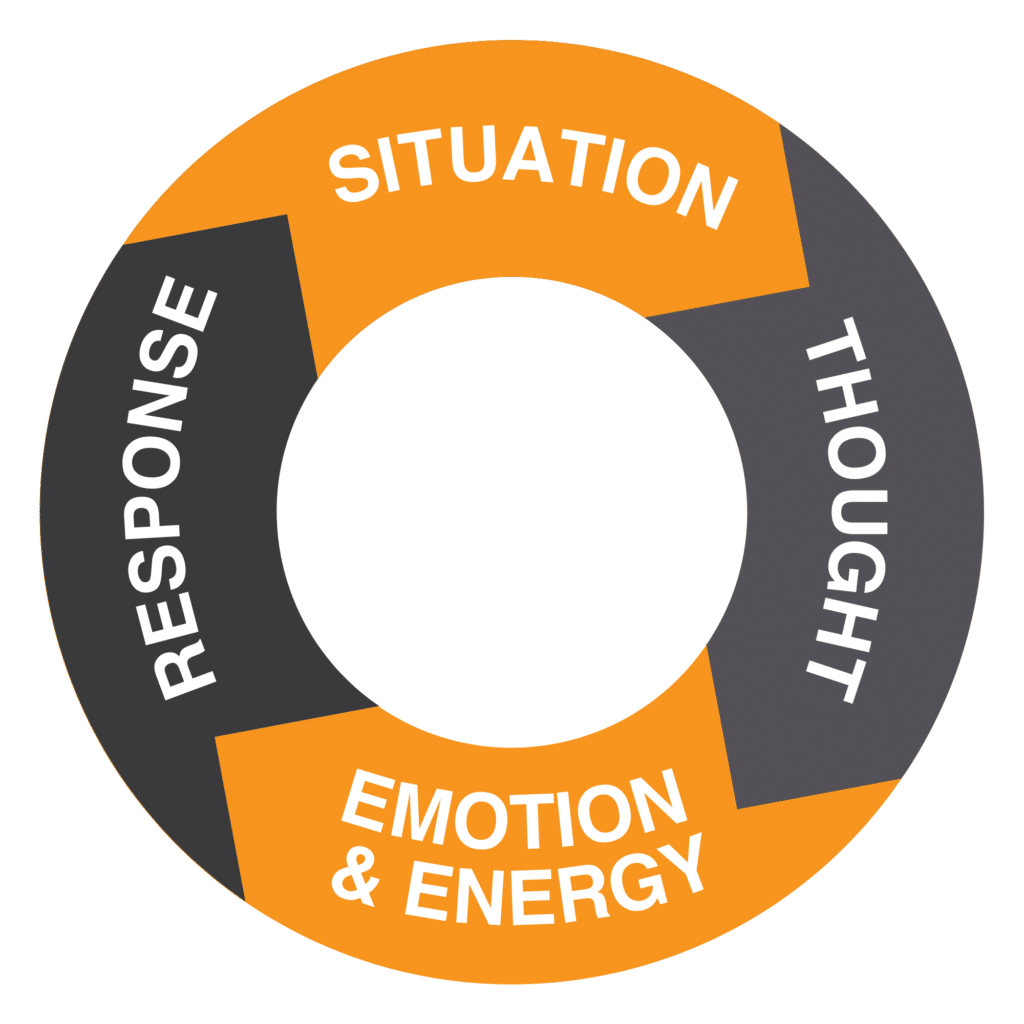
This example shows how working from an internal locus of control creates a culture of ownership, learning, and accountability, while an external locus of control can foster blame, defensiveness, and stagnation. Same situations, different thoughts, different emotions and energy, different response, and therefore different situation.
The goal isn’t to be internally locussed all the time but to spend more time in the driver’s seat. When we recognise what’s within our control and take responsibility, we unlock momentum and unrealised potential. Research demonstrates that people with a more internal locus of control tend to be healthier, happier, more resilient, and more successful across life domains (Cheng et al., 2016).
Remember, you’re always in control of the direction you STEER your life, but it begins with recognising that you’re in the driver’s seat and not just along for the ride.
Fostering the Driver Mindset
If you’ve found that calling out underperformance, mistakes, or inappropriate behaviour often leads to defensiveness, it may be time to reflect on how you’re approaching these conversations. For someone to genuinely hear feedback, they need to feel seen, safe, and validated (think about SCARF needs). When the brain perceives threat, even in the form of helpful feedback, it can activate the survival response, shutting down their ability to reflect, take ownership, or problem-solve.
The single most effective way to encourage an internal locus of control in others is to model it yourself.
For instance, when approaching someone who had made an error, instead of placing blame you might say:
“I’ve noticed several errors in this final document, which is out of character for you. I realise I didn’t allocate much time for this task, and you may have felt rushed. That said, we’ll need to fix this before we submit it.”
By taking some ownership, you set the tone for psychological safety. In most cases, the other person is more likely to follow your lead, perhaps acknowledging they didn’t manage their time well or failed to proofread properly.
Once safety is established, you can guide the conversation with solution-focused questions like:
- “What are some different ways you could approach this next time?”
- “What would you do differently if faced with this again?”
- “I hear there are some things outside your control—what is within your control here?”
- “What do you need from me to move this forward?”
- “When will you start?”
Each of these questions gently directs their attention inward, toward actions, decisions, and behaviours they can influence. By the end of the conversation, they may still feel disappointed, but not defensive which is a far more conducive emotional state for learning and quick course correction without compromising trust, ownership, or respect.
Contrary to popular belief, accountability doesn’t require confrontation—it requires connection.

Reflective Questions
- What situations are you most likely to shift into an external mindset? What tends to trigger that shift?
- How do you typically respond when things don’t go as planned—do you look inward or outward?
- What areas of your current role or personal life could you take greater ownership of?
- Who comes to mind as someone who consistently operates from an internal or external locus of control? What is it like to live, work, or play alongside them?
- What would your workplace or family environment be like if everyone operated from an internal locus more often?
- What practical actions can you take to help others around you move toward a more internal mindset?