

Understanding Life Positions
Sometimes we find ourselves behaving in ways that feel out of character or difficult to explain—even to ourselves. We may feel uneasy about something we said or did yet struggle to pinpoint why we acted that way. Often, these moments are influenced by unconscious beliefs formed in childhood—beliefs that shape what is known in psychotherapy as our Life Positions.
Developed by psychiatrist Eric Berne, the founder of Transactional Analysis, Life Positions help explain how the beliefs we hold about ourselves in relation to others can impact our actions. In the previous topic, we explored the importance of self-esteem. Life Positions build on this by offering a framework to understand how high or low self-esteem might present through four common behavioural orientations.
At its core, a Life Position is a basic belief about “whether I’m OK” and “whether others are OK.” In this model, “OK” refers to whether someone is morally good, worthy, competent or likeable, not in an objective sense – but in a perceived sense of worth or value in relation to others. These perceptions are informed by the beliefs we formed early in life, well before we had the capacity to question them. These perceptions influence how we navigate relationships, conflict, and decision-making.
We tend to form a predominant or “character” life position early in life (0-7 years). This becomes our default or baseline way of seeing ourselves in relation to others. It is relatively stable and typically requires conscious effort and support to change. However, we also hold surface life positions, which are far more fluid. These shift based on context and interaction—often changing in a matter of seconds depending on who we’re engaging with and how we feel in the moment.
Understanding life positions is a key aspect of understanding and improving relationships.
Understanding your dominant Life Position and becoming aware of how and when you shift between them, can be a powerful step in increasing emotional intelligence, challenging unhelpful beliefs, and building more authentic, constructive relationships with others.
In this 6.30 minute video we talk more about each of the four life positions, their impact on leadership and business performance.

The four Life Positions (LP) outlined below describe our beliefs about ourselves in relation to others in any given moment.
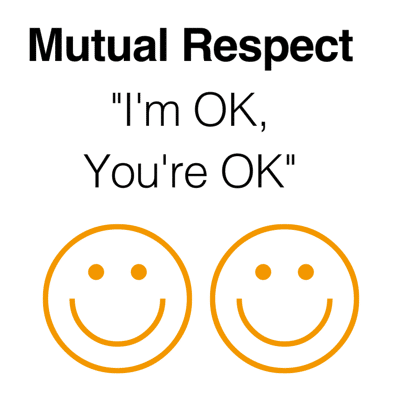
Mutual Respect Life Position
Operating from a place of unconditional positive regard means holding the belief that both you and others have inherent value.
Even when someone is underperforming or getting it wrong, you maintain faith in their capacity to improve—and in your own capacity to support that growth. This life position reflects a mature and respectful mindset. It’s not reactive; it’s a conscious and intentional choice.
When we operate from this space, our behaviours reflect it: we engage in active listening, ask curious and constructive questions, and deliver clear, respectful feedback. Of all the life positions, this is the only one considered truly constructive and sustainable in leadership, because it fosters growth, accountability, and psychological safety—for everyone involved.
Superior Life Position
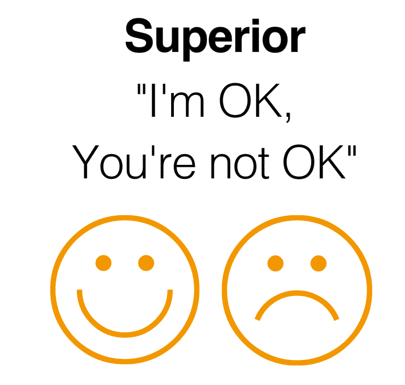
This self-preservation strategy is rooted in a need for control, dominance, or status—where the best defence is a strong offence.
By belittling others or exaggerating one’s own superiority, a person attempts to elevate their own self-worth, often in response to underlying insecurity. At its extreme, this life position can manifest as aggression or bullying. In more subtle forms, it may show up as sarcasm, passive-aggressive jibes, put-downs, gaslighting, or other manipulative behaviours that erode the self-esteem of others.
The underlying belief is: “If I can make you feel small, I’ll feel bigger.”
It’s important to recognise that healthy self-esteem cannot be “too high.” What often appears as arrogance or inflated self-importance usually stems from low self-worth masked by overcompensation. This life position may present through behaviours such as boasting, constant one-upmanship, interrupting, or undermining others—none of which foster psychological safety or authentic connection.
Inferior Life Position
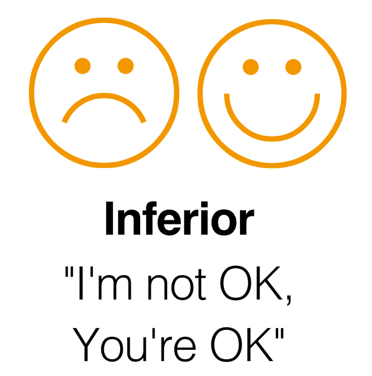
This is a submissive life position driven by a deep need for acceptance and approval.
A person operating from this space often prioritises being liked or respected over being authentic or assertive. To maintain connection—especially with more dominant personalities—they may consistently go along with others’ wishes, even when it contradicts their own values or best interests. In some cases, even hurtful attention is preferred over none at all.
This life position is often marked by self-doubt, over-accommodation, and a reluctance to take ownership or set boundaries. Individuals may change their behaviour to fit in, take on additional responsibilities to earn validation, or avoid conflict by being overly agreeable.
Common behavioural indicators include shifting opinions to match others, doing others’ work to gain approval, and regularly deferring decision-making to stronger personalities. Though well-intentioned, this approach often leads to burnout and diminished self-worth over time.
Why Bother Life Position
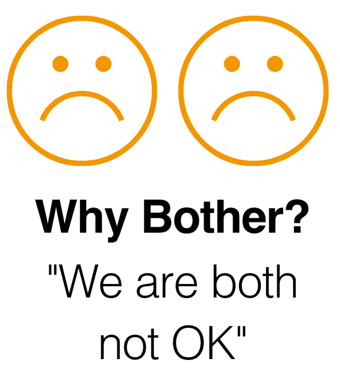
This life position is characterised by hopelessness—a belief that nothing will change, no matter what anyone does.
Often described as the “end of the road” mindset, this position emerges when a person feels they’ve exhausted all options and efforts. It is commonly accompanied by feelings of overwhelm, frustration, and despair. From this perspective, both the self and others are seen as ineffective, leading to an externalised focus and a belief that control has been completely lost.
When someone operates from this life position, they may quit the job, leave the relationship, or withdraw from the project. However, the more damaging version occurs when they stay—but disengage. They may begin to self-sabotage, put in minimal effort, and unconsciously seek out confirmation that things are broken beyond repair.
Phrases like “See? I told you this wouldn’t work” or “What’s the point?” become common. This outlook reinforces their sense of powerlessness and spreads negativity within teams or relationships. Common behavioural cues include giving up quickly, low motivation, and a tendency to undermine progress.
Three Practices That Build Mutual Respect
Assume good intentions
At their core, people are inherently good. Lead with the assumption that others mean well, even when their words or actions fall short. Starting from this place fosters openness, reduces defensiveness, and creates space for understanding.
Stay curious
Assumptions shut down conversation. Curiosity opens it up. Before jumping to conclusions, take time to ask questions, listen deeply, and explore what’s really going on. Curiosity shows respect—and often reveals context we might otherwise miss.
Maintain positive regard
Every human being has equal worth—whether they’re a team member, the CEO of a Fortune 500 company, or a three-year-old child. Good people can make bad decisions. When we separate the person from their behaviour, we treat them with dignity and create space for accountability, not shame. The person is never the problem—so don’t treat them as one.
Leadership Application Activity
This activity will help you reflect on how your core beliefs about yourself and others—your Life Position—influences the way you lead. You’ll identify your default position, explore how it shifts in different situations, and apply this awareness to strengthen your leadership effectiveness.
Step 1: Reflect on your default Life Position
Take a few quiet minutes to consider the questions below. Jot your thoughts down in your journal.
- When something goes wrong in life or at work (big or small), what are your instinctive thoughts about yourself?
(“I failed,” “I’m not good at this,” “I am the only one who knows what they’re doing” “I knew this would never work,” etc.) - What are your instinctive thoughts about others in those moments?
(“They are lazy,” “They’re so bad at this,” “They’re amazing” “They must really know what they’re doing” “Nobody can be relied on,” etc.) - What are the situations where you find yourself feeling insecure, or less confident than others?
- What are the situations where you find yourself feeling insecure, or more confident than others?
A formal assessment can be found here. It shouldn’t take more than a few minutes to complete.
Now, based on your answers, which Life Position appears to be your default position?
Step 2: Recognise your shifts
Life Positions aren’t fixed; they shift based on context. Think about how you might relate differently depending on who you’re engaging with:
- Do you approach your parents, friends or other family members differently? Why might this be?
- Do you approach senior leaders differently from how you approach your team?
- Are their members of your team you approach differently? Why do you think you do this?
- Which relationships do you feel more reactive in? Passive in? Withdrawn from?
- When you feel pressure or stress, do you become more dominant, agreeable, checked out, or supportive?
Now, write down any patterns you notice in your shifts between positions.
Step 3: Scenario Practice
Read the following four brief leadership examples. For each, identify which Life Position the leader is operating from. We will discuss your responses in the Module 7 Coaching session.
For each leader, ask yourself:
What Life Position is this behaviour reflecting?
What impact might this have on their team?
Step 4: Apply it to a situation in your Leadership
Choose one current leadership relationship or situation that feels challenging, frustrating or complex. Reflect on the following:
- What Life Position do I tend to occupy in this relationship or situation?
- How does this influence my tone, behaviour, or assumptions?
- What might it look like to consciously shift to “Mutual Respect” in this relationship?
- What would I do, say, or ask differently if I fully believed in both my value and theirs?
Step 5: Set an intention
Set a small, specific intention for your next interaction with this person or situation. For example:
“I will ask one curious question instead of giving advice,” or
“I will state my expectations clearly and respectfully.”

Reflective Questions
Please take some time to answer the questions below. The power of self-reflection lies in your willingness to be honest and vulnerable. The more openly you engage, the more insight and growth you’ll unlock.
- What triggers you to move to an inferior space?
- What triggers you to move to a superior space?
- Are there any areas of your life where you have, or are currently residing in the “why bother” position? Does this require any further action?
- Where do you shift when providing constructive feedback?
- Where do you shift when receiving constructive feedback?
End of module. We look forward to seeing you at your next coaching call