

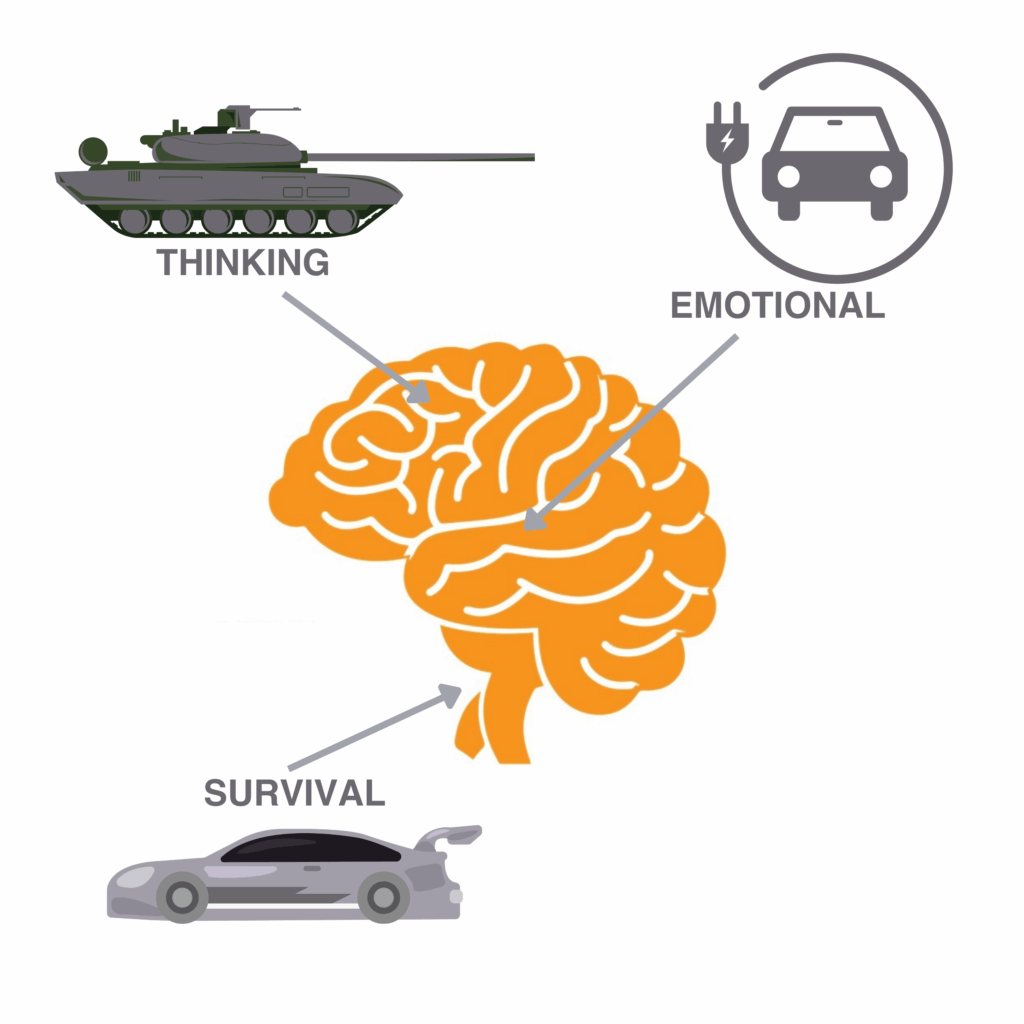
If our thinking brain is like a military tank (slow, deliberate and energy-intensive, built for strategy and precision) and our emotional brain is like an electric car (highly responsive, efficient, and attuned to the environment), then our survival brain is like a drag car, built for raw speed and rapid response.
Stress is a normal—and essential—part of the human experience.
Believe it or not, stress plays a vital role in keeping us alive. It helps us stay alert, respond to challenges, and protect ourselves from threats. But too much unmanaged stress can take a toll on our physical health, wellbeing, relationships, and performance.
Understanding the basic science behind the stress response can help us make sense of what’s happening in our body and brain when we feel overwhelmed. And with that awareness, we’re better equipped to regain control, respond with intention, and build our capacity to thrive.
Watch this 3 minute video to learn more:

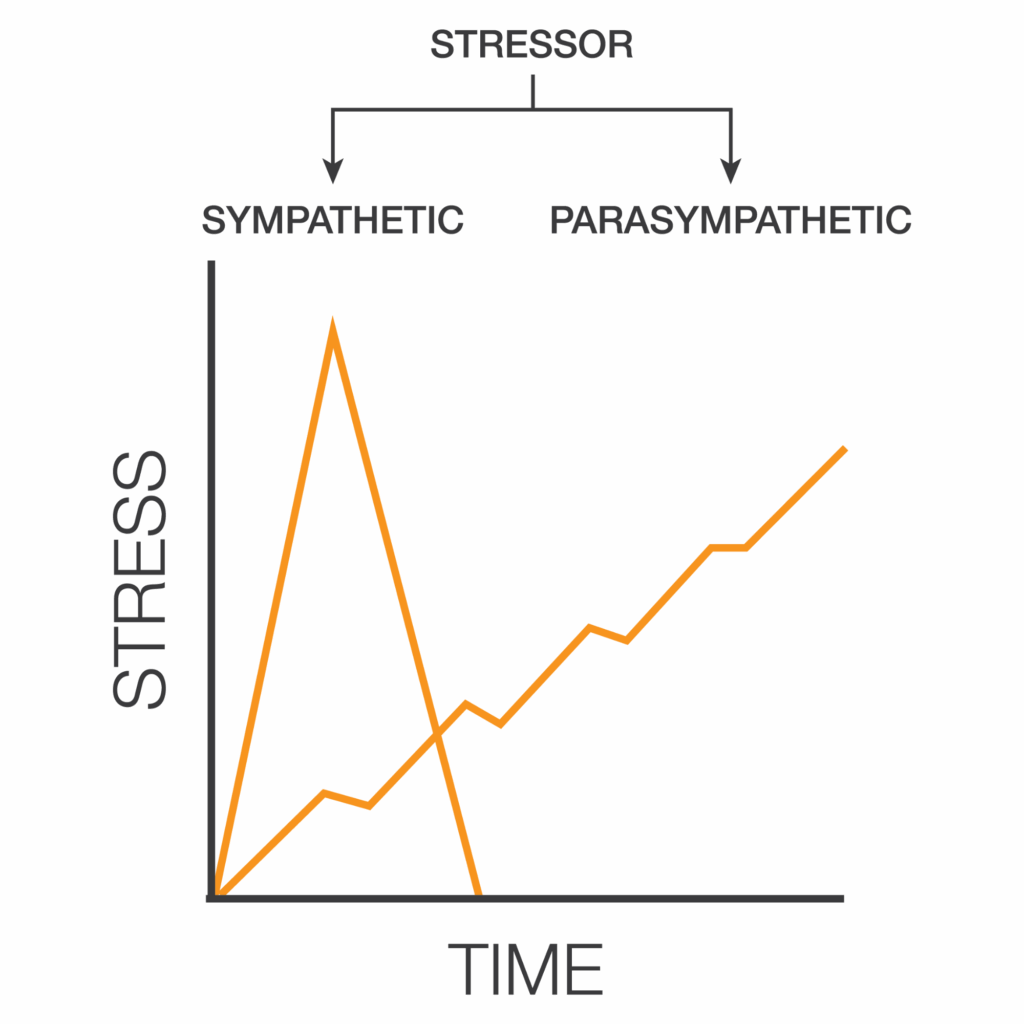
The part of our brain responsible for managing the stress response (the survival brain) has been around for over 300 million years. It evolved to help us deal with short-term, immediate threats, like escaping predators or finding food. In these moments, the brain floods the body with stress chemicals like adrenaline and cortisol, giving us a burst of energy to fight or flee. Once the danger passes, those chemicals quickly subside. On a graph, this looks like a sharp spike followed by a rapid drop.
But in today’s world, most of our stressors aren’t physical or quickly resolved. Instead, we face long-term, complex challenges—things like financial pressure, work demands, health concerns, and relationship strain. These don’t trigger a quick resolution, and our survival brain isn’t built to cope with stress that drags on.
As a result, stress hormones can build up gradually over time—a slow, stepped increase rather than a quick spike and release. When this happens day after day, it puts a long-term strain on the body and can contribute to serious health problems.
Stress is part of life—we can’t avoid it, but we can manage it.
The goal isn’t zero stress, but better strategies.
By recognising our triggers and choosing healthier responses, we can stop stress from running the show.
Markers of stress
Step one in managing stress is noticing it.
It’s important to recognise when stress is helpful and when it’s a sign your system is becoming overloaded.
Below are some common stress markers across four domains. Take a moment to read through them. Which ones resonate with you? Are there any not listed that you notice in yourself? Jot them down in your journal.
Pro tip: Not sure what your stress markers are? Ask someone who knows you well—especially someone you live with. They’ll often spot the patterns before you do.
| Mental | Physical | Emotional | Behavioural |
|---|---|---|---|
| Trouble thinking clearly Memory problems Can’t concentrate Low attention span Poor judgement Anxious or racing thoughts Constant worrying | Tightness in muscles Aches and pains Headaches, trembling, sweating Nausea, dizziness Chest pain, rapid heartbeat Loss of appetite Lack of sleep, dreams, nightmares | Moodiness Easily upset or hurt Irritability or short temper Agitation, unable to relax or keep still Feeling overwhelmed Sense of loneliness and isolation Depression or general unhappiness | Eating more or less Sleeping too much or too little Isolating yourself from others Procrastinating or neglecting responsibilities Using alcohol or drugs to relax Nervous habits (e.g. nail biting, pacing) |
Stress Reduction Strategies
Stress reduction strategies are well known but sometimes though we know them, we forget to do them. Have a look at this list below and consider which strategies could be (re)added to your arsenal:
- Regular exercise, at least 20 minutes a day 3 times a week
- Find an exercise you enjoy doing and look forward to doing
- Balanced diet
- Keeping hydrated
- Adopt good sleep hygiene practices – (see topic on Stress Performance Curve for more information)
- Relaxation techniques such as mindfulness, yoga, meditation and breathwork – (see topic on Stress Performance Curve for more information)
- Social connection (that is both meaningful and enjoyable)
- Avoid conflict
- Laugh more
- Giving yourself adequate rest
- Reducing your alcohol intake – emerging research suggests that no more than 1 standard drink of alcohol per week should be consumed (yes, you read that right)
- Consider hot / cold therapy (sauna and ice bath sessions)
We’ll explore many of these in more detail throughout the program. For now, note the ones that stand out as helpful to you.
Reflective Questions
Please take some time to answer the questions below. The power of self-reflection lies in your willingness to be honest and vulnerable. The more openly you engage, the more insight and growth you’ll unlock.
- What is currently causing me stress?
- What are my stress markers? (what happens to my body and brain when I am stressed – refer to table above)
- What impact is this having on my leadership and my teams’ wellbeing?
- Does anything need to change? If so, what?