

The Thinking Brain – Framing
In the previous topic we discussed working memory and attention as in-the-moment limitations of the thinking brain, but it is also important to consider how we store and retrieve memories, so our brain can call on them later when needed.
Watch the video below to learn what frames are, why we need them and how they can influence our leadership:

Our brain stores memories as images because it’s efficient—remember, the brain is always looking to conserve energy. In the same way you might have a photo you love and you put it inside a frame, your brain does something similar.
To make sense of your memories (images), the brain applies “frames”—mental shortcuts or perspectives shaped by our past experiences. These frames influence how we interpret the present and anticipate the future.
The word frame can interchangeably used with words like attitude, perspective or thoughts and feelings. In this program, we use the language of frame.
A Working Example
Let’s take relationships—whether intimate or platonic—as an example of how frames work. If, growing up, the key people in your life were generally calm, emotionally available, and responsive to your needs, your brain may have built a frame that “others are reliable, safe, and trustworthy“. You’re more likely to expect stability and emotional connection in future relationships.
On the other hand, if your early experiences involved emotional distance, inconsistency, or unpredictability, your brain may have developed a very different frame—one where people can’t be relied on, or where your needs are too much or must be suppressed to maintain connection. This frame might lead you to be overly self-reliant, anxious in closeness, or quick to anticipate rejection.
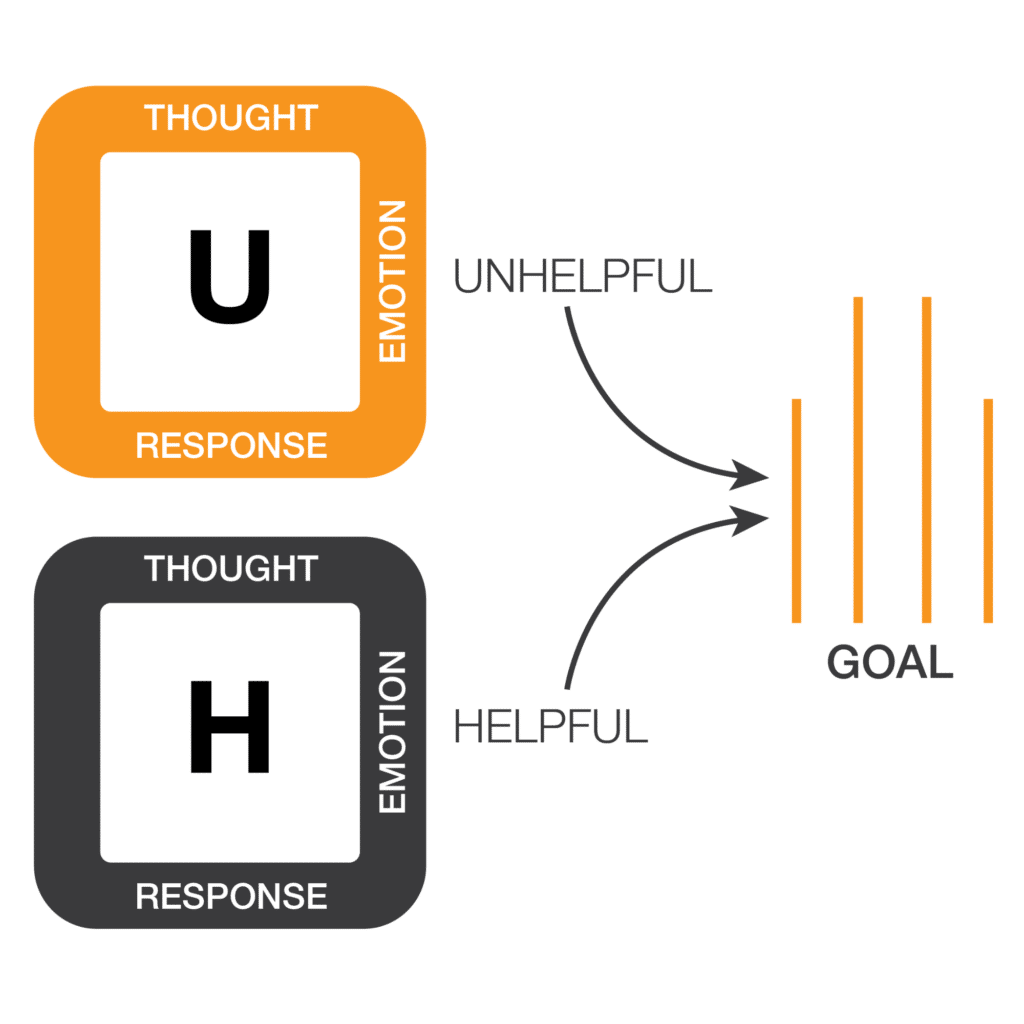
This is your personal frame—not good or bad, right or wrong, but either helpful or unhelpful depending on your current goals.
If your goal is to develop open, trusting relationships, a frame that sees others as safe and emotionally available will likely support that. Thus it would be considered a helpful frame towards your personal goal.
But if we change the context and thus the goal that same way of thinking may become unhelpful.
Let’s imagine you’ve just visited a new foreign country that has a number of security risks. Your goal may temporarily now be to protect yourself from emotional harm. Perhaps a more guarded frame might serve you better in this context.
What we are describing here is something called metacognition; the awareness and regulation of thought. In this example, it’s the ability to recognise that you’re usual frame towards people may not be the best one to operate from in this new context.
These frames are formed through the thinking brain, but once established, they’re stored and activated by the emotional brain—often operating automatically unless consciously challenged. More on that a little later in the program.
For now, we invite you to just consider how aware you are of your frames, and how often you simply let them reactively drive your choices?
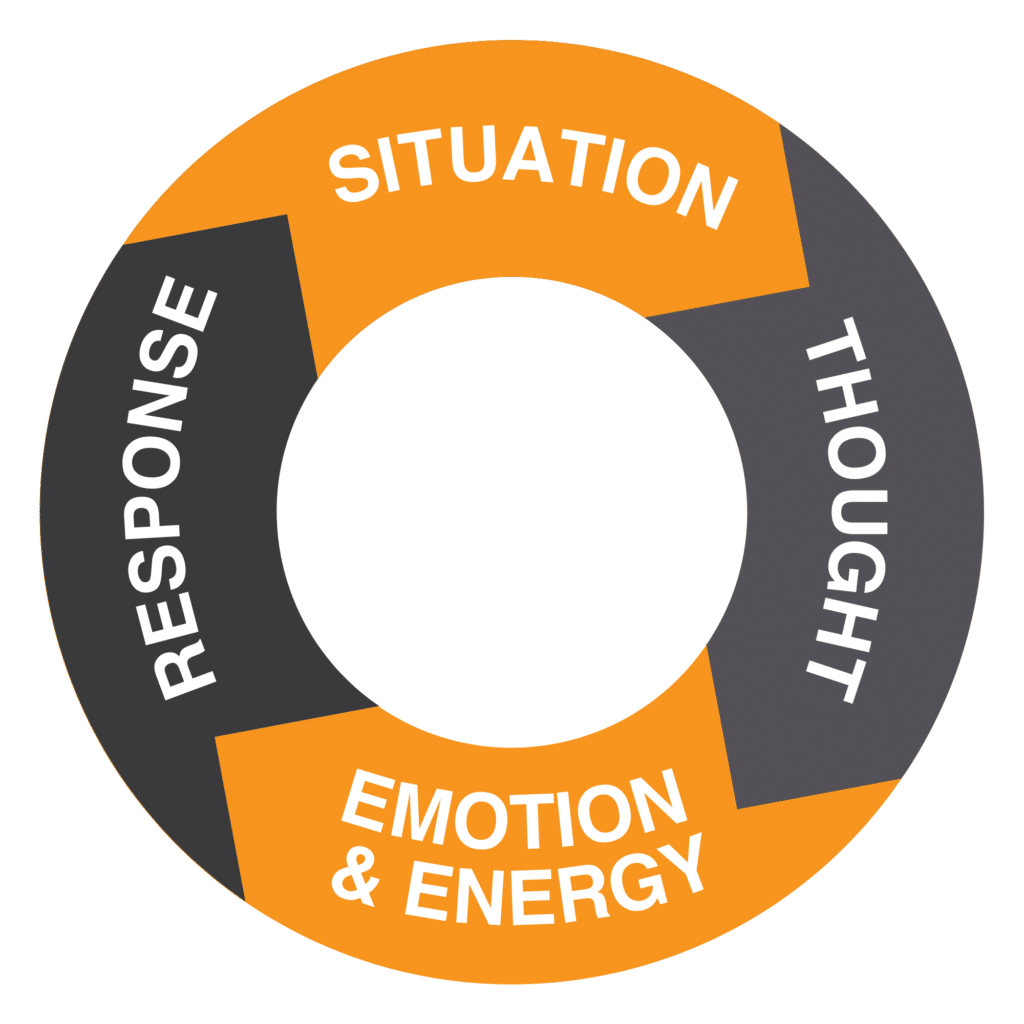
By being aware of your Frames, you increase your capacity to take control of your STEER model.
In the next topic we will explore how we can challenge an unhelpful frame in a process called reframing.
In Summary
Frames are NOT:
- Positive or negative
- Right or wrong
- Good or bad
They are either helpful or unhelpful depending on your current goal.
Reflective Questions
Please take some time to answer the questions below. The power of self-reflection lies in your willingness to be honest and vulnerable. The more openly you engage, the more insight and growth you’ll unlock.
- What frames are you operating from at work? (What are some reoccurring thoughts?)
- What frames do you have around yourself? (What does your self-talk sound like?)
- What frames do you have around your family members?
- What frames are you handing out to your loved ones? (What do you say, or not say that influences their sense of self-worth?)
- What frames do you have around your finances? (e.g. “It’s too hard to save money”, “I’ll never be rich”, “I should live within my means”)
- What frames do you have around your health? (e.g. “diabetes runs in my family”, “It’s impossible to eat 5 serves of vegetables every day”, “exercise is good for my mental health”)
- Are these helpful frames in line with our goals?
“Between stimulus and response there is a space. In that space is our power to choose our response in our response lies our growth and our freedom”. – Victor Frankl