

“Becoming is better than being.”
— Carol Dweck
How we learn about ourselves
When we are young, how do we come to understand ourselves and the world around us? For most of us, the answer is simple, through our parents or caregivers. In combination with our environment, these early relationships shape our entire worldview. Our caregivers are our first teachers and whether consciously or not, they teach us not only how the world works, but who we believe we are within it.
From an early age, they begin to observe traits in us and assign them labels. Some of us may have been called cheeky, shy, sporty, bookish, helpful, thoughtful, smart, or funny. Like post-it notes, these labels stick and as we grow, we absorb them. Over time, they shape our beliefs about our strengths, weaknesses, abilities, and identity. Depending on which labels were reinforced (and how), we begin to form mindsets about ourselves and others, some of which can support growth, while others may limit it.
The power of mindset
Imagine two children. The first child shows a talent for sport and is quickly labelled a “natural athlete.” They’re praised for their effortless skill, their finesse, and especially for winning. Their sporting success is seen as something they were born with.
The second child doesn’t have the same innate ability. They struggle more on the field and don’t always win. But they’re described as “hardworking” or “determined”. They’re consistently praised for showing up, putting in the effort, and sticking with it, even when it’s tough.
Which child is more likely to be successful over time? According to Dr Carol Dweck, educational psychologist and leading researcher in the field of motivation and learning, it’s the second child. The reason? Mindset.
Growth vs Fixed Mindset
Dr Dweck identified two key mindsets that shape how humans approach learning and development:
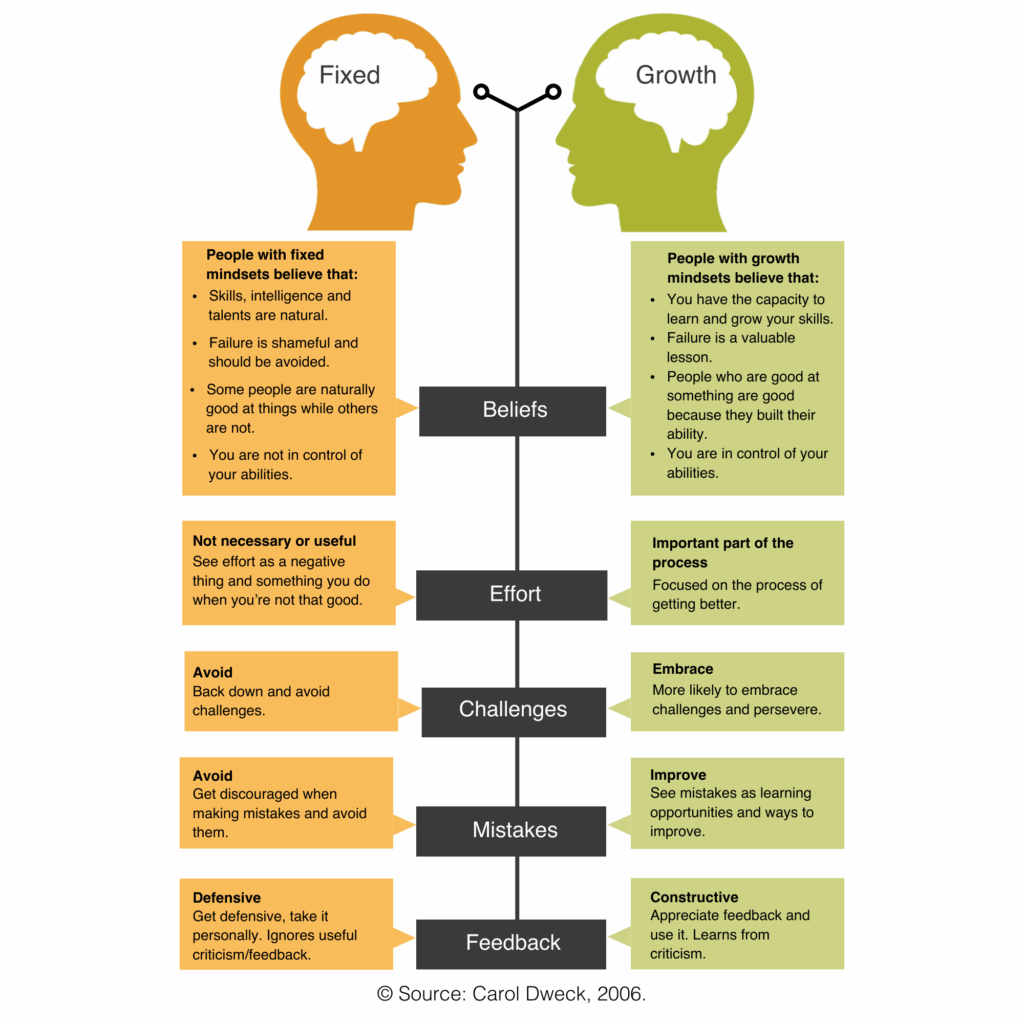
A growth mindset is the belief that skills, talents, and abilities can be developed through effort, practice, and learning. It’s grounded in the idea that no matter where you start, you can improve.
A fixed mindset, on the other hand, is the belief that abilities are innate and unchangeable. People with this mindset tend to attribute success to natural talent rather than effort. Because of this, they may be less likely to take risks, try new things, or persevere when they face challenges, believing improvement simply isn’t possible.
Watch this 6.5-minute video to learn more about how mindset relates to leadership:

While natural talent might lead to early success, it’s a growth mindset that sustains learning, resilience, and progress over the long term. Let’s return to the example of the two children for a moment.
Labels with a Fixed Focus
The focus on the first child’s innate talent, though well intentioned, teaches them to view their abilities as fixed rather than developed. As a result, they may begin to associate effort with inadequacy, believing that if something requires hard work, they must not be truly talented. Over time, this can lead to avoidance of challenges, fear of mistakes or failure, and even shame when things don’t come easily. Additionally, the emphasis on winning as the key measure of success reinforces a belief that their worth is tied to outcomes, rather than effort or growth.
Labels with a Growth Focus
The focus on the second child’s learning and effort, delivered with the exact same good intentions, teaches them that ability comes from effort and so, effort is valuable in and of itself. Receiving praise for their persistence, resilience, and commitment teaches them that improvement comes through practice, that setbacks are part of the learning process and that the learning, not the outcome is the metric of success. This builds a mindset that fosters confidence, adaptability, and a willingness to take on challenges, even in the face of failure.
Choosing a growth mindset
Though we’re just children who grew up, many of us still carry the labels and beliefs formed early in life. These well-intentioned messages—about our intelligence, talents, or personality—can shape how we see ourselves, often reinforcing a fixed mindset that limits our willingness to take risks or embrace challenge. But here’s the powerful truth. As adults, we have the ability to pause, reflect, and reframe.
We can choose to challenge the stories we’ve internalised, and begin developing a growth mindset, even if we didn’t learn it early in life. This shift starts with recognising that effort is not a sign of inadequacy, but a gateway to growth. That struggle doesn’t mean failure, it signals learning and that feedback, even when uncomfortable, is not a judgment of our worth but recognition of —and an investment in—our growth potential.
With self-awareness and practice, we can build a mindset that embraces challenges, learns from mistakes, and sees potential in ourselves and others. In doing so, we not only change the trajectory of our own growth, but we also model a more empowering approach for the people around us too.
Leadership Application
Fostering a Growth Mindset in your team
We’ve all worked with someone who, when faced with a major challenge, harsh feedback, or a significant loss, seems to thrive. They tap into a surprising level of energy, curiosity, and drive to fix the problem or learn from the situation. Equally, many of us have seen the opposite. Someone who shuts down, becomes defensive, avoids risk, or refuses to step outside what they already know for fear of getting it wrong. So how do you foster the first kind of mindset in your team?
As with many leadership practices, it starts with you. If you want your team to lean into discomfort, get creative in the unknown, and stay engaged through failure, you need to lead by example and do it first. Leaders with a growth mindset focus on the process over the outcome. They demonstrate that effort, reflection, and learning are just as valuable as results.
You can model this mindset through behaviours such as:
By consistently embodying these behaviours, leaders signal to their teams that growth is expected, supported, and celebrated. Over time, this encourages greater resilience, accountability, innovation, and shared success—even in the face of setbacks.
Benefits of a Growth Mindset
A Working Example
As leaders, we should celebrate both wins and setbacks, but more importantly, we need to recognise and reward the process of learning and growth, not just the outcome.
For example, if a team member says, “I’m just not good at negotiating with clients” (a fixed mindset), you might respond:
“You might not feel confident negotiating yet—but it’s definitely a skill you can build with practice. I’ve seen how quickly you pick things up in other areas. I wasn’t great at negotiating when I first started either, but with experience, it became a real strength. How can I support you to keep building this skill?”
This simple reframe reinforces belief in their potential and signals that effort and development matter.
Adding a simple word like ‘yet’ to sentences can help people challenge a fixed mindset.
Want to learn more about the research?
This is a fantastic 12-minute TED talk by Dr Carol Dweck, the seminal thinker behind the Growth Mindset. She developed and researched the construct throughout her entire career. This is an optional activity.


Reflective Questions
Please take some time to answer the questions below. The power of self-reflection lies in your willingness to be honest and vulnerable. The more openly you engage, the more insight and growth you’ll unlock.
Take a moment to reflect on the impact of the labels you experienced and how they informed your mindset.
- How would your early caregivers describe you? What traits or labels did they emphasise?
- How have those labels shaped your self-perception? What have been the benefits and limitations of those labels?
- When you think about these labels, do they foster a fixed or growth mindset?
- In what situations might a fixed mindset be holding you back from learning, adapting, or stepping up?
- What labels have you given people in your team and how does this impact your ability to cultivate growth mindset in them? (e.g. organised, lazy, hard worker, personality hire)
- How can you shift your language or behaviour to encourage more of a growth mindset in areas of underperformance?
End of module. We look forward to seeing you at your next coaching call