

Lencioni’s Five Dysfunctions of a Team
Have you ever seen a team fall apart because of bickering, infighting, or a failure of accountability?
If you have, it’s unlikely they got there overnight and at the root cause of most dysfunction is an absence of trust.
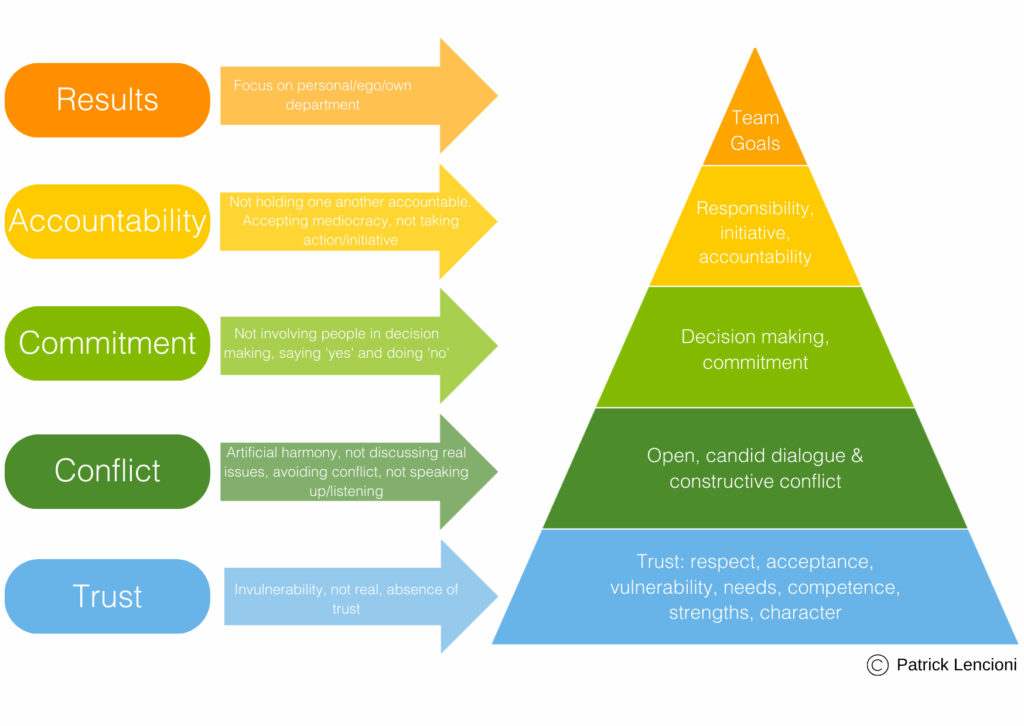
Patrick Lencioni’s Five Dysfunctions of a Team model can help us understand how this lack of trust manifests in business performance.
Watch this 3.5 minute video next:
When trust is present
Let’s first explore what the presence of trust is. If there is genuine trust in my team, we most likely treat each other from a place of mutual respect. We are open to getting it wrong because I know my team will ultimately support me. I can be myself; I can speak up and trust that what I say is received with good intention. This enables healthy conflict. We can be open and honest in delivering suggestions or constructive criticism, because ultimately, it’s all about us achieving the best outcome for the team. This conflict enables commitment. If everyone has had their opinion heard and it’s genuinely considered (even if not utilised) then it is more likely they will commit to the decision made by the team. This commitment increases the chances of an internal locus of control and
accountability. If I felt part of the decision, then when I get it wrong, or it does not go as planned, I am more likely to own my portion of responsibility because at the end of the day I’m committed to the outcome. This in turn, creates a team that is focused on the result, and therefore more inclined to achieve that result.
When trust is absent
What about in the absence of trust? In this instance, I refuse to speak up or challenge you because I don’t trust you will take what I say with good intent. The group may appear to be harmonious on a surface level but are unhappy and dissatisfied beneath the surface. If you have a ‘quiet’ team – it could be sign of the absence of trust. Because I don’t speak up and say what I think I lack any commitment to the decisions being made because “it’s not my decision”, this lack of commitment leads to a lack of accountability when the cracks start to emerge. Pointing the finger at other people for not doing their part and creating an externally focused culture. This blame game culminates in people focused on self-preservation and their own individual goals, rather than the overarching team goals (which are also unlikely to be clear).
You can see then that it all starts with trust.
Trust Building Strategies
- Give helpful feedback
- Be dependable
- Actively listen
- Be transparent
- Lead by example
- Be honest and open
- Show gratitude
- Be empathetic
- Showing vulnerability
- And by being authentic.
Reflective Questions
- How have you been prioritising trust lately?
- Who would benefit from you focusing on trust?
- What can you do differently going forward?