

Reluctance to give feedback
Conflict is a necessary and valuable part of high performing relationships and teams. Yet as individuals, we can sometimes avoid and retract away from these discussions. Why is that the case?
The human brain loves to conserve energy. And let’s be honest, giving constructive feedback requires a fair bit of energy before, during and after the conversation, if it is to be effective. When things feel a bit too hard, the brain encourages us to move away from, rather than engage in it.
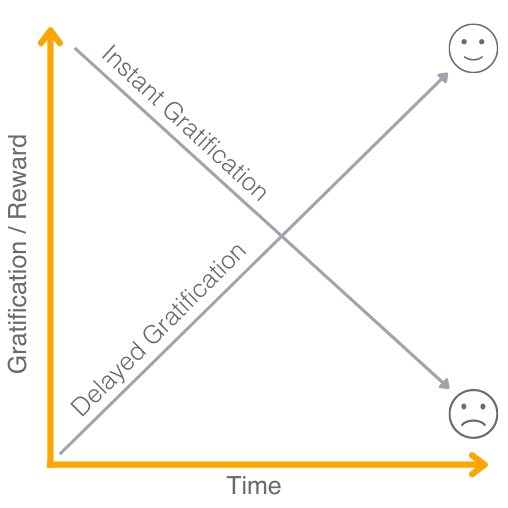
This graph demonstrates this natural tendency. At a very basic level, humans are designed to move towards things that make them feel good and away from things that make them feel bad. This was an excellent survival trait. Do more of what helps us to survive; sleep, rest, eat and have sex!
While also avoiding things that harm us or threaten our survival like rancid smells, dangerous creatures, being isolated from the community and spending too much time in the elements etc.
However, that simple brain now lives in a much more complex world and in fact there are numerous things that make us feel good that are indeed NOT good for us in the long run (AKA instant gratification). Some examples of this are eating takeaway food. It is unlikely to kill us today, but over time, if repeated, can create health issues later. We are not necessarily wired for delayed gratification, and this requires a lot more conscious control and self-regulation to do well. For example, if I study now, I’ll get my degree later. This requires energy and discipline, two things the brain would prefer to avoid.
So how does this relate to giving constructive feedback? Well, we may opt for instant gratification. I avoid the conversation today, telling myself “It’s not that bad”, or “it’s not my place”, or “he’ll change on his own accord”. In the moment this saves us energy, making us feel good. But in the long run this is detrimental to our relationship and overall performance.
When considering giving constructive feedback, we must harness the idea of delayed gratification. Yes, it may be uncomfortable now and require some thought and attention, but in the long run it will prevent the issue from festering, facilitate a growth mindset and positively impact overall performance.
The first part of managing conflict well, is acknowledging this natural reluctance and discomfort and then proactively doing things to increase the likelihood of success in these (sometimes) tough conversations. This module will focus on the tools to achieve this.
Constructive Feedback Model
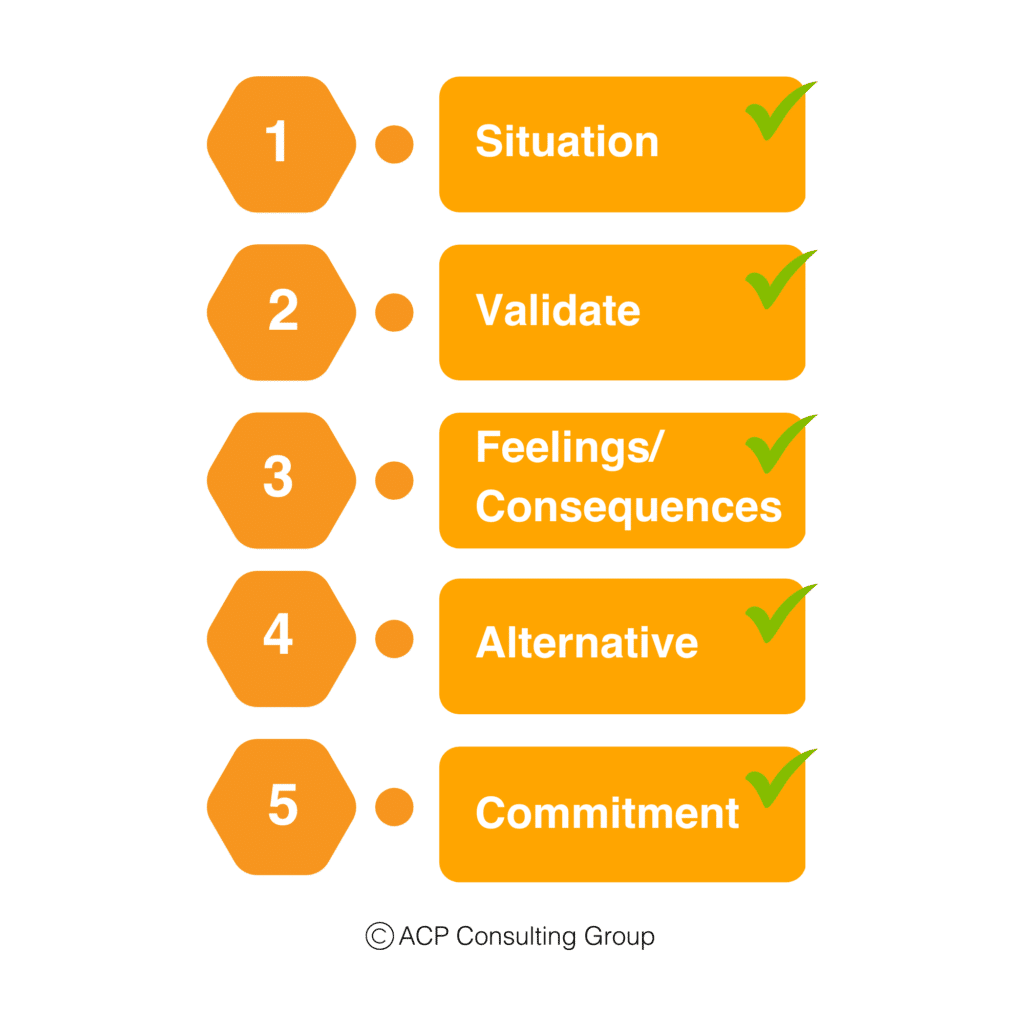
- Situation: Outline the specific context behind the feedback. When, where, what, who etc is this in relation to?
- Validate: What might be a reason they are under-performing? What strength is being overused? What good intentions are present? What are they not aware of?
- Feelings or Consequences: What is the consequence to the leader, team, business? Include relevant emotions.
- Alternative: Here you suggest an alternative. If you are giving feedback verbally, it is best to use questions to encourage ideas and collaboration on a solution.
- Commitment: It’s vital to clarify the “so what” of the conversation to ensure you are on the same page. What is the agreement and action items from here?
Examples of Constructive Feedback
“There has been a handful of occasions in the lunchroom where I personally feel the jokes you are making aren’t appropriate for everyone in the room. I really admire your sense of humour and appreciate the energy it brings to the team most of the time. However, jokes about race and gender should probably be avoided in the workplace to ensure we aren’t making anyone feel discriminated against.”
“Recently I have noticed you arriving late to work. I am aware that you aren’t intentionally being late, but this mismanagement of your time is creating stress on the rest of the team. It delays our morning huddle and can sometimes feel like you don’t respect our time. Can I ask you to prioritise getting to work on time, if not 10 minutes early going forward?”
“At times, the way you communicate with the apprentices can come across as patronising. I know this is not your intention as you really enjoy helping others to grow and sharing your knowledge. I have observed the apprentices feeling inferior when receiving instructions from you and I am concerned this isn’t good their learning or self-esteem. In future, I would encourage you to consider the information they already know prior to giving them your instructions or advice. This will help them feel empowered and knowledgeable.”
Reflection Questions
- Do you adopt an attitude of instant gratification or delayed gratification when it comes to feedback?
- Who are you comfortable to give feedback to, and who might you feel less comfortable with? What’s different about these people?
- Which part of the 5 step model do you feel you do well and where are your opportunities for improvement?
- When you are receiving feedback from a leader, what do you appreciate and not appreciate? What can you learn from this?