

Why is change so hard?
Once a habit is formed, our brain prefers to keep it. Change requires effort, uncertainty, and the rewiring of well-established neural pathways, which can feel uncomfortable or even threatening.
Think back to earlier topics like STEER, Neurons and Learning, Limitations of the Brain and Framing. Each of these explored how our brains are wired for efficiency, pattern recognition, and psychological safety. Change disrupts these systems, activating resistance—not because we’re lazy or unmotivated, but because our brain is doing what it’s designed to do: conserve energy and avoid perceived threats.
To lead change effectively, we must understand this resistance—not fight it—and use practical strategies to help ourselves and others move forward anyway.
Start this topic by watching our 3-minute video explaining how our brain responds to change:

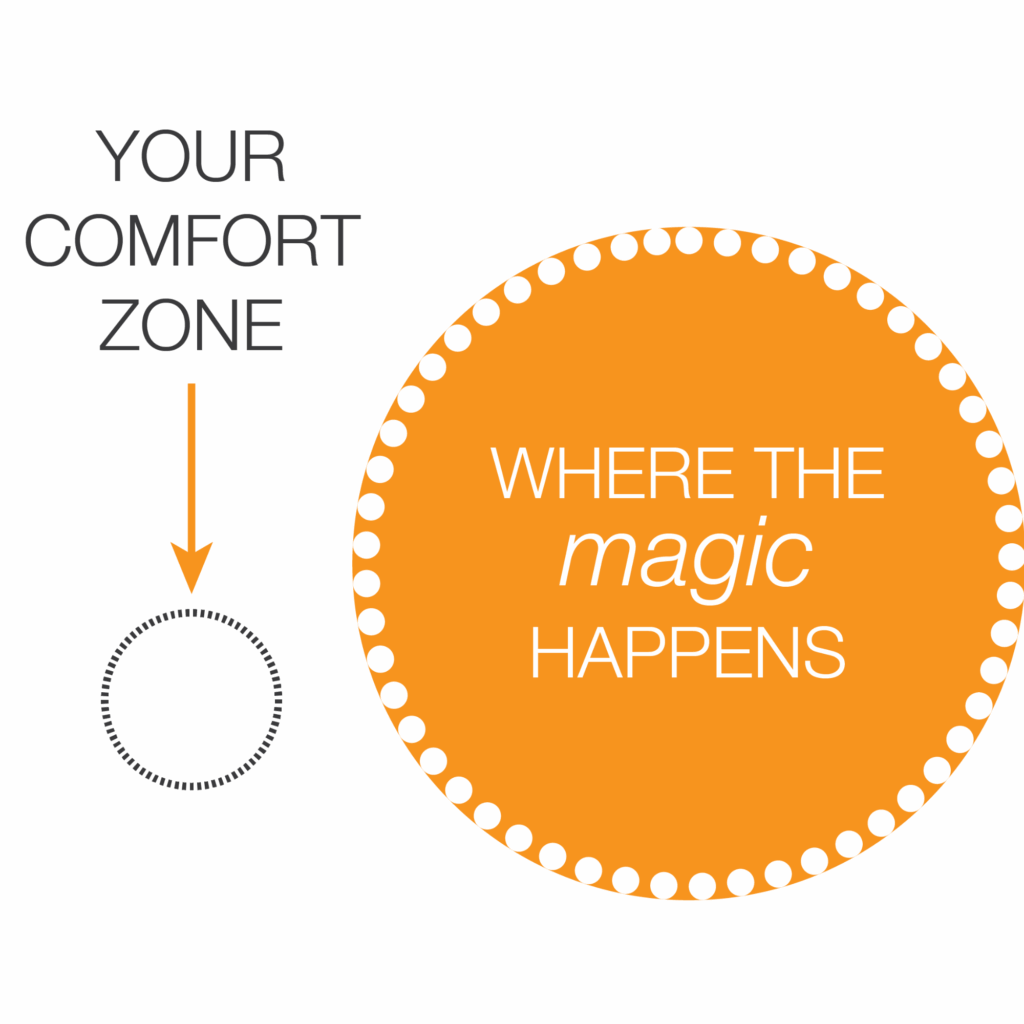
Our brains are hard wired to conserve energy. We establish habits so our subconscious mind can manage them, freeing up our limited conscious attention to engage in more complex functioning. This limited attention means that when we attempt to change a habit, there is a feeling of discomfort and resistance. This is because the conscious energy required to change are far greater than that of an established habit.
An anthropological lens
Due to the evolutionary age of our brain, humans are biologically wired to manage slow, linear changes very well. Our brains evolved to adapt to gradual shifts like seasonal changes, a child’s development, or a steady decline in food sources. These changes gave us time to adjust.
However, modern life demands that we navigate rapid, complex, and compounding change, often in real-time. Entire systems can shift overnight due to economic shocks, policy reforms, global crises, or even terror attacks. What once took generations now happens in days or even seconds.
This mismatch between how our brain evolved to process change and what today’s world demands means that change often feels abrupt and overwhelming—this is normal. Our challenge as leaders is to bridge this gap with compassion, strategy, and tools that support sustainable adaptation.
The Signature Exercise: A Simple Reminder
As leaders, it can be frustrating when we’re met with resistance to change—especially when we know how essential and urgent the change really is. But before we rush to judgement, it helps to remember that the brain is wired to resist change. Discomfort is not dysfunction; it’s human nature.
In the video, you explored one strategy for reconnecting with compassion during these moments (crossing your arms the “wrong” way). Here’s another simple, hands-on exercise you can do right now. You will need a pen and a blank piece of paper.
Step 1: Sign your name
Find a blank piece of paper and sign your name. That’s it!
How did it feel? Easy? Automatic? Did you even have to think about it?
That’s because this is a well-established neural pathway—strengthened over years of repetition.
Step 2: Sign your name again
Now, once you have located your paper and picked up your pen, sign your name again, but this time with your eyes closed
How did you go? Still relatively easy? Maybe a little messier, but still legible? How much did you have to think about it?
This demonstrates just how deeply ingrained this motor pattern is—even when you remove visual cues, it’s still quite effortless.
Step 3: Yep, you guessed it. Sign your name again
Don’t worry, you can keep your eyes open for this one, but here’s the kicker – before you sign your name this time switch your pen to your other hand and use your non-dominant hand to sign your name.
How did that go? How easy was it this time? How much did you have to think about it? Would your signature still pass at the bank?
Most people find this very uncomfortable, awkward, and noticeably harder. You might have uttered an unintentional groan or felt resistance to doing it at all. Your brain doth protest, “Let’s just go back to what’s familiar.” And when you did do it, it’s likely your signature looked nothing like the original.
If you practiced it regularly, do you think you could improve? Probably.
But here’s the key question… Would you want to? Probably not. The lesson? This is just the brain on change – it is not broken, nor being difficult – it’s just unfamiliar. Change takes effort, time, and repetition and even when the destination is worthwhile, the journey is always uncomfortable.
This exercise is a reminder that the resistance you see in others isn’t always unwillingness, it’s the natural process of rewiring our brain.
Welcome to being human…welcome to leading change.
Jumping S-Curves: Because change is inevitable
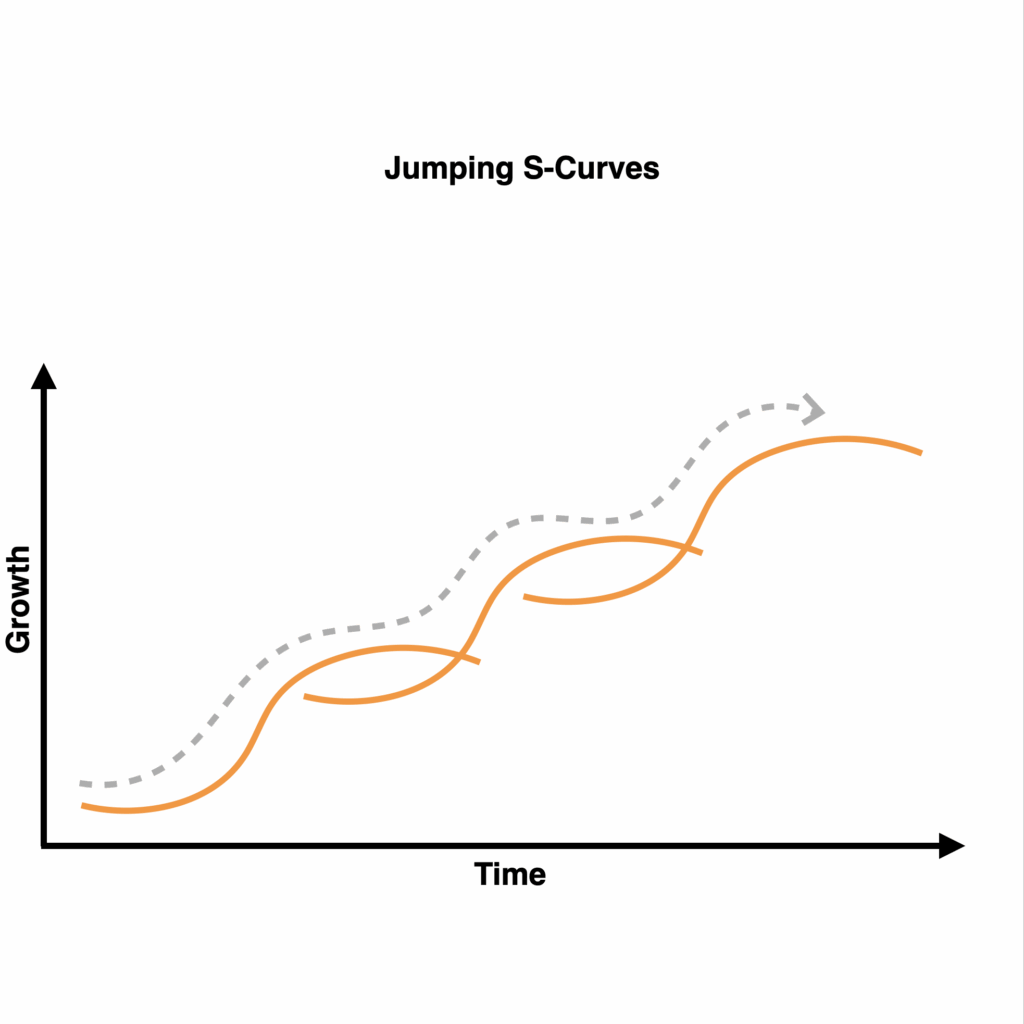
The Jumping S-Curves model is a concept drawn from innovation theory and organisational learning.
The model is a great illustration of the way change works. The S-Curve represents the typical life cycle of learning or change over time. It shows how progress starts slow, accelerates, and then eventually plateaus. The curve illustrates three main phases of change:
Launch & Learn Phase (Conscious Incompetence)
This is the beginning of the curve, where new ideas or skills feel difficult. Progress is slow, and the effort is high because people are consciously learning something unfamiliar.
Growth & Momentum Phase (Conscious Competence)
Once the initial learning begins to take hold, an inflection point is reached, and progress accelerates. There is greater confidence, outcomes improve, and mastery builds. This is the steepest part of the curve as growth and impact tend to increase rapidly at this point.
Maturity & Plateau Phase (Unconscious Competence)
Eventually, the learning levels off. A point of mastery is reached, where the work feels comfortable and routine. We are now on autopilot.
The risk of not taking the leap.
Of course, just when we start to get comfortable, something changes. A new promotion. A restructure. A child hitting adolescence. A move to a new country. Just like that, we are required to jump onto the next s-curve and that feels uncomfortable. It can be very tempting to stay on the plateau and not jump the curve however, without new challenges, innovation stalls, cultural complacency sets in, talent becomes disengaged, competitors overtake, and organisations run the risk of obsolescence. Think Blockbuster, Kodak, or Nokia. All are examples of companies that stayed on the curve for too long.
Innovation, growth, and adaptation require us to let go of mastery and return to the discomfort of learning. That is the cost of progress.
It’s messy, effortful, and uncertain—but necessary.
The sooner we recognise that this cycle is a necessary part of life and not a sign of failure, the more resilient and adaptable we become.
Facilitating readiness for change
Research shows that for someone to be truly ready and willing to change, three key conditions must be met:
As a leader, in addition to providing these three things it is also your responsibility to create an environment that is conducive to change. Some important considerations include:
In the next topic, you’ll explore a structured model that helps leaders recognise, support, and manage these conditions, facilitating more successful, sustainable change.

Reflective Questions
Please take some time to answer the questions below. The power of self-reflection lies in your willingness to be honest and vulnerable. The more openly you engage, the more insight and growth you’ll unlock.
- Check in on your own relationship with change. Are you acting as a positive role model for adaptability?
- Thinking about a recent S Curve you jumped. What was that like? What did you learn from it? What did the leap enable you to achieve? Thinking back on how you managed it, could you have done anything differently to support traction?
- Thinking about a current change you are navigating, what emotions are coming up for you? Is there anything you can be doing differently?
- Are you using a compassionate approach to managing change in your team?
- Are you paying attention to individual needs as you navigate change as a team?
- What does your team need more of you, to better support them with a change?