

Recognition Amplified
In the previous module, we explored the importance of balancing praise with constructive feedback. In this module, we’ll take that a step further by showing you how to deliver praise in a way that delivers a stronger return on investment than a simple “thanks for today.”
You’ll learn how to apply Attribution Theory, a psychological concept that helps us understand how people explain success and failure, to make your recognition more meaningful, memorable, and motivating.
Watch this 4-minute video on how to use this in your praise

Attribution Theory
Attribution Theory explores how people interpret and explain the causes of behaviour and events. As humans, we have a natural desire to make sense of the world—especially when outcomes are unclear or unexpected. When we don’t have all the facts, we tend to create our own explanations to fill in the gaps and reduce uncertainty. For example, if a waiter is rude, we might assume it’s because they dislike us, hate their job, or are simply having a bad day.
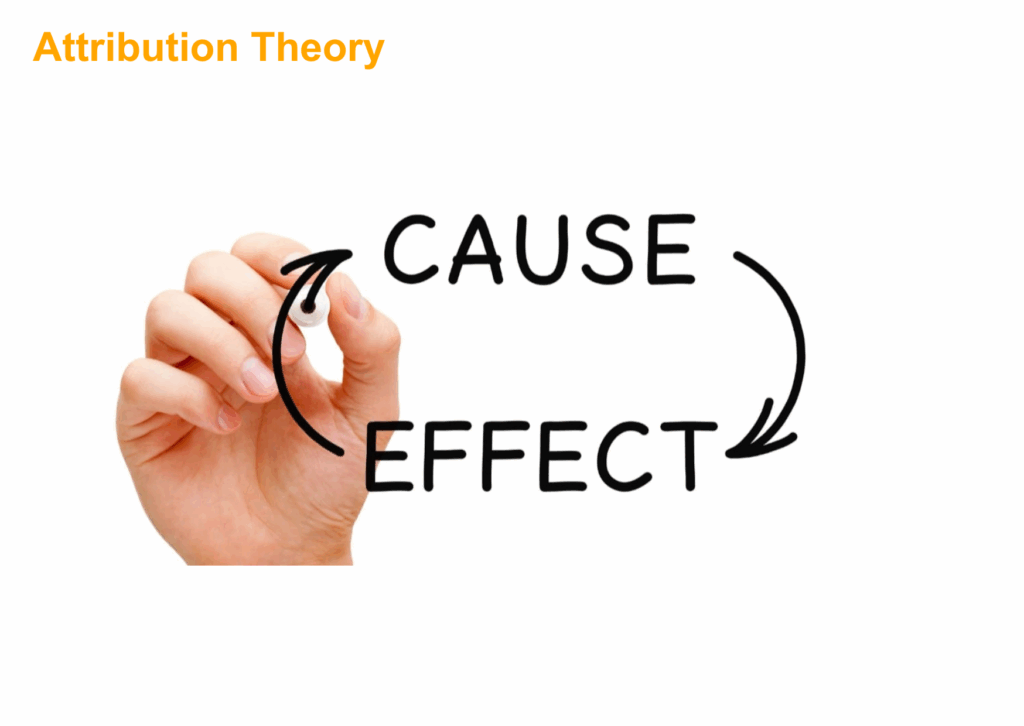
In a leadership context, Attribution Theory can be applied to the way we deliver praise. Instead of simply saying “great job,” we can use our knowledge of the innate drive to understand the causes of behaviour to help team members understand why they performed well—by linking their success to specific attributes, behaviours or choices they made. This helps them internalise the cause of their success (e.g. effort, preparation, persistence), which strengthens confidence, reinforces motivation, and builds capability over time. We call this the cause-and-effect model of acknowledgement.
Cause-and-Effect Praise
Effective praise goes beyond simply acknowledging a result, it connects the behaviour and to the positive impact it created. This deepens motivation, reinforces personal ownership, and encourages the repetition of high-impact behaviours.
Use the structure below to help you deliver praise that is specific and meaningful. By clearly identifying the cause (what they did and why it mattered) and the effect (how it benefited others), your recognition becomes a powerful leadership tool that builds confidence, capability, and a positive leadership culture.
- Cause
a) What specific action or behaviour are you recognising?
b) What does this say about them personally? What skill, quality or mindset enabled it?
c) Which trait, strength, value, or intention was demonstrated? - Effect
a) What was the positive impact on you, the team, the client, or the business?
b) What outcome or improvement did their behaviour help achieve?
c) Why did their contribution matter in this context?
Examples in Action
Rather than just saying “Thanks for managing that meeting well today”, you can use cause and effect to get a greater return on praise. For example:
“Thanks for your efficiency (attribute) today … the way you handled that question in the team meeting was so clear and concise (cause) and it helped the team to have a better understanding of the process (effect).”
Rather than the generic praise: “Great job on that presentation!”
“Great job on that presentation. Your diligence (attribute) in preparing really shone through. You clearly took the time to understand the audience and tailor your message (cause). It was so engaging, the audience was hanging on every word (effect).”
Rather than the generic praise: “Thanks for managing that tricky client.”
“Thanks for managing that tricky client. You stayed calm (cause) and were so empathetic (attribute) which effectively de-escalated the situation. This client is notoriously challenging, and your approach really turned things around (effect).
Rather than the generic praise: “You’ve been smashing your deadlines lately!”
“You’ve been smashing your deadlines lately, and I think that’s because you’ve been planning ahead and prioritising so well (cause). I admire how receptive (attribute) you have been to the time management feedback I gave at your last review. It’s having a really noticeable impact on the team’s momentum (effect).”
This approach makes the individual’s personal attribute or skill (their strength) more visible and tangible to them, reinforcing self-awareness, confidence and encouragement to repeat the behaviour. When used consistently, it helps build a strengths-based culture—where team members clearly understand their unique strengths and feel empowered to apply them in meaningful ways.
It’s all in the delivery…
Everyone will have their own unique style of delivering praise within the cause-effect model—and that’s not only okay, but it’s also encouraged. The most important thing is that your recognition feels genuine and the way you express it is authentic to you. If praise feels uncomfortable for you – start small and work your way up gradually.
Application Activity: Spotting Strengths in Action
This activity will help you build the habit of recognising and reinforcing strengths in others—a core practice of strength-based leadership. Please complete the steps below and come prepared to share your reflections in your next small group coaching session.
Step 1:
List the names of the people you work with closely (direct reports, peers, collaborators) and under each name, jot down the positive qualities, strengths, or attributes they bring to the team (e.g. empathy, attention to detail, resilience, problem-solving, attention to detail, humour).
Step 3:
Keep this list somewhere visible to you for the next 1–2 weeks (e.g. on your desk or saved on your desktop).
Step 4:
Observe your team, look for real examples where these strengths show up. Briefly note what the person did (the cause) and the positive effect it had on you and others.
Step 5:
Use this information to deliver at least one cause-and-effect praise statement authentically. Observe whether this begins to influence how much you notice strengths in others or how you deliver praise more generally.

Reflective Questions
- How impactful do you feel your current approach to praise is? Why or why not?
- Are there any opportunities to use the cause-effect model to amplify your praise?
- How comfortable do you feel delivering praise? Why might this be?
- What impact might more meaningful praise have on the confidence and productivity of your team?
End of module. We look forward to seeing you at your next coaching call.